Sensitive Places After Bruen: The Complete Guide to Where a Permit Holder Still Cannot Carry
Published on October 26, 2026
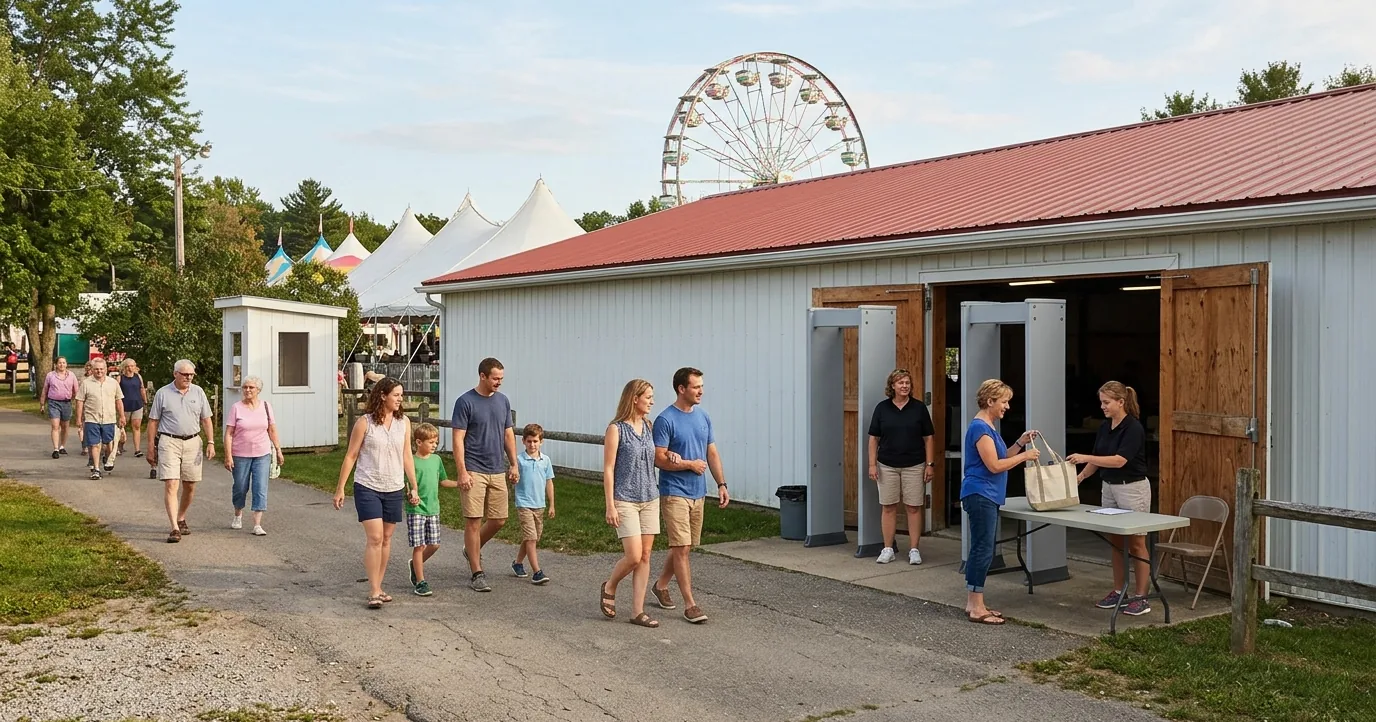
This summer, the roughly 50,000 people expected at the Summit County Fair in Tallmadge, Ohio, had to walk through a brand-new exhibit hall before they reached a single ride, barn or food stand, with a bag check and a magnetometer on the way in. A year earlier, Ohio’s attorney general had advised that county fair boards are political subdivisions bound by the state’s firearms preemption law, which means they cannot ban guns on their grounds. The fair board’s answer rested on a distinction it says Ohio law still draws: people may carry on the open fairgrounds but not inside buildings. So it put a building across the front gate, and the fair’s director told Fox 8 in Cleveland that the new entrance passes legal muster.
Whether it does is a question for Ohio’s courts. What the episode shows is how the map of places a permit holder cannot carry really gets drawn in 2026. Bruen settled that the Second Amendment protects carrying a handgun in public. It did not settle where “public” ends, and in the four years since, legislatures, federal agencies, courts and the occasional fair board have been fighting over exactly that line.
This guide is the map: the federal places off limits in every state, the locations nearly every state restricts, what the post-Bruen states added, how courts are sorting the new lists, and the parking lot and signage rules that decide what happens to the gun when you arrive.
What Bruen Actually Said About Sensitive Places
Two passages in the Supreme Court’s opinions frame this whole fight. In District of Columbia v. Heller (2008), the Court listed “laws forbidding the carrying of firearms in sensitive places such as schools and government buildings” among the longstanding measures its decision did not disturb. Fourteen years later, New York State Rifle & Pistol Association v. Bruen built on that line and gave lower courts two instructions that pull in opposite directions.
The first is a permission. The historical record, the Court said, yields relatively few 18th and 19th century places where weapons were banned outright, naming “legislative assemblies, polling places, and courthouses,” but nobody disputed those bans, so the Court treated them as settled. Courts may then reason by analogy from them “to determine that modern regulations prohibiting the carry of firearms in new and analogous sensitive places are constitutionally permissible.”
The second is a limit. New York had argued that any crowded place with police nearby could qualify. The Court answered that this reading “defines the category of ‘sensitive places’ far too broadly,” and that there is “no historical basis for New York to effectively declare the island of Manhattan a ‘sensitive place’ simply because it is crowded and protected generally by the New York City Police Department.”
Every sensitive place case since has been an argument over which of those two instructions governs a particular location. States read “new and analogous” generously; challengers point to Manhattan. Our guide to Heller, McDonald, Bruen and Rahimi explains how the text and history test works.
The Federal List: Off Limits in Every State
Federal rules travel with you. No state permit, reciprocity agreement or permitless carry law changes any of these.
Federal buildings. Under 18 U.S.C. 930, knowingly bringing a firearm into a “Federal facility” is punishable by up to a year in prison. That means any federally owned or leased building “where Federal employees are regularly present for the purpose of performing their official duties”: Social Security offices, IRS walk-in centers, agency field offices, national park visitor centers. Notice must be posted at each public entrance, and without it you cannot be convicted unless you actually knew. No court has held that the statute’s exception for “hunting or other lawful purposes” covers ordinary permit carry, so do not lean on it.
Federal courthouses. The same statute raises the maximum to two years in a federal court facility, and the “lawful purposes” exception does not apply there at all.
Post offices. Postal Service regulation 39 C.F.R. 232.1(l) says that “no person while on postal property may carry firearms,” openly or concealed, “or store the same on postal property, except for official purposes.” Postal property means all real property under the Postal Service’s control, and in Bonidy v. USPS (2015) the Tenth Circuit upheld the rule as applied to a post office parking lot. That is the trap. A pistol locked in your glove box is still being stored on postal property when the lot belongs to the post office.
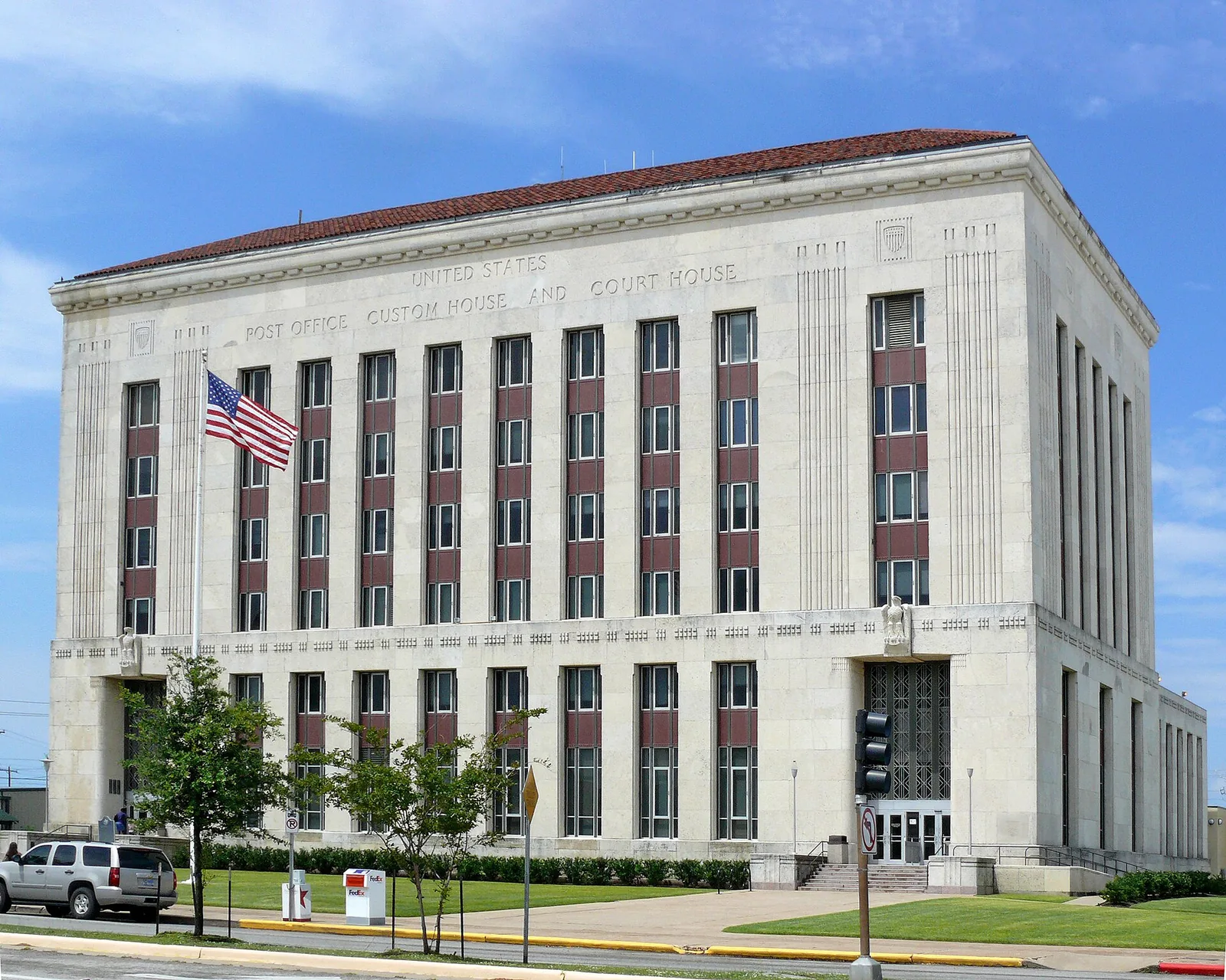
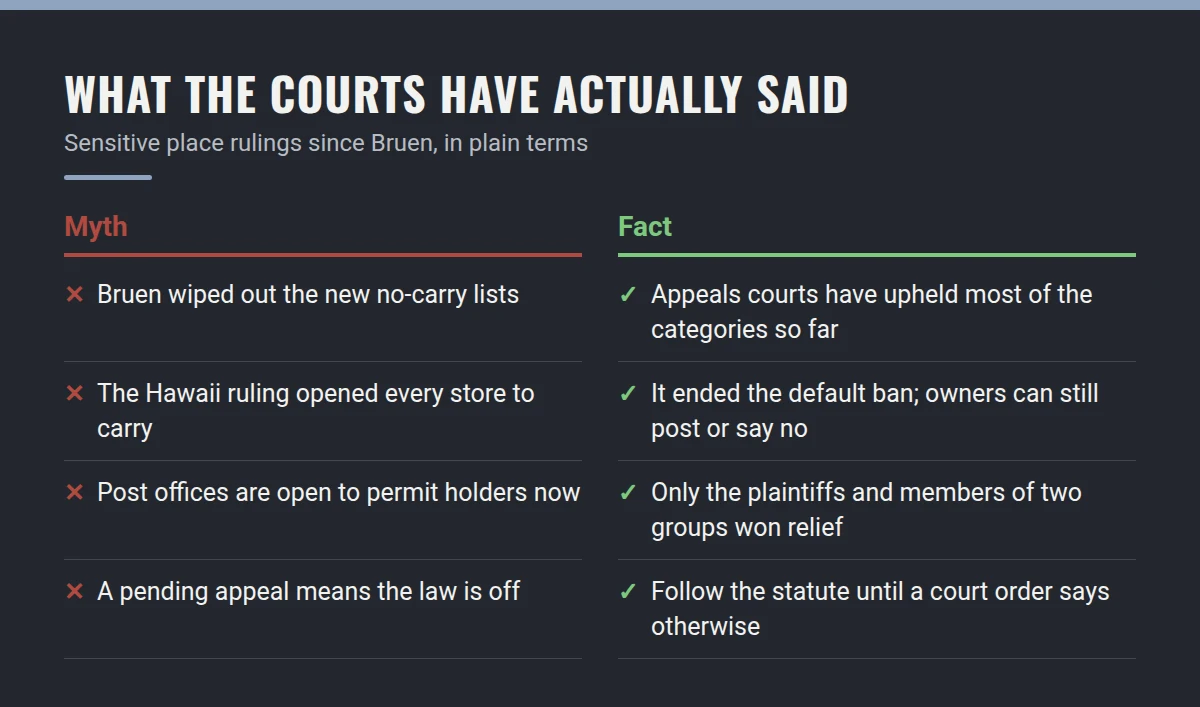
No federal location rule has been questioned more since Bruen. In 2024 a federal judge in Tampa dismissed a charge against a postal driver with a Florida permit who carried a pistol into the facility where he worked. In 2025 a federal judge in Fort Worth declared both the statute and the postal regulation unconstitutional as applied to ordinary post offices, and the government dropped its appeals in both cases. But the Fort Worth judgment protects only the plaintiffs and members of the two gun rights groups that sued, and in March 2026 a federal judge in Connecticut upheld the ban in a ruling now on appeal. For everyone else, the post office is still off limits, lot included.
School zones. The Gun-Free School Zones Act draws a 1,000-foot ring around every K-12 school, and its permit exception works only with a license issued by the state the school is in. Reciprocity does not satisfy it. Our guide to the 1,000-foot rule covers the exceptions and the drop-off traps.
Airports and trains. TSA’s rule, 49 C.F.R. 1540.111, bars a weapon on your person or in your carry-on from the moment screening of you or your bag begins, through the sterile area and onto the aircraft. A handgun flies only unloaded, locked and checked, which we walk through in our guide to flying with a handgun. Amtrak also accepts handguns only as checked baggage, and the major intercity bus lines refuse them outright, as our guide to traveling by train, bus and cruise ship explains.
Parks, lakes and bases. You may carry in national parks wherever the surrounding state allows it, but visitor centers, ranger stations and other park buildings remain federal facilities. Army Corps of Engineers lakes are stricter: 36 C.F.R. 327.13 bans loaded firearms on Corps projects unless you are hunting, at an authorized range, or hold the district commander’s written permission. VA rules bar firearms anywhere on VA property. And a state permit generally counts for nothing at a military base gate; Joint Base Lewis-McChord’s page says flatly that “Concealed weapon permits are not valid” there.
Tribal land. State permits stop at the reservation line, and tribal codes take over. Our guide to carrying on tribal land covers the highways, casinos and checks to make before a trip.
The Places Nearly Every State Restricts
Long before Bruen, almost every state kept its own list, and the most permissive states still do. The core is remarkably consistent: courthouses, polling places, schools, jails and police stations, the secured side of an airport, and some version of bars, sporting events or government buildings.
Texas shows how long a permissive state’s list can run. A permitless carry state since 2021, it still bars handguns at polling places during voting, in courts, at racetracks, in correctional facilities, in the secured area of an airport, and at high school and professional sporting events. Bars that earn 51 percent or more of their income from on-site drinking, hospitals, nursing homes, amusement parks and college sporting events can keep license holders out too, provided they give the notice the law requires, and a carrier without a license gets no such notice protection. The old license-holder section, 46.035, was repealed in 2023 and folded into 46.03, so older guides cite a dead statute.
Illinois wrote 23 prohibited categories into its 2013 concealed carry act, public transit among them. Ohio’s list has eight, including buildings owned or leased by state and local governments where public employees regularly work, which is the kind of building rule the Summit County Fair is leaning on.
A few permissive states also put conditions on the government’s own bans. In Kansas, a state or city building cannot ban concealed carry throughout the building unless every public entrance has “adequate security measures,” meaning metal detectors or similar equipment plus armed personnel. In Arizona, a government building or public event that asks you to disarm must provide “temporary and secure storage” you can use on the way in and out. In those states a lawful ban usually comes with a checkpoint or a locker; if you see neither, take it up with the agency afterward, not at the door.
What the Post-Bruen States Added
The states that lost their discretionary permit systems in Bruen answered by shrinking the map instead. New York moved first, within days of the decision: its Concealed Carry Improvement Act lists 20 categories of sensitive locations, and carrying in any of them is a felony even with a license. New Jersey followed in December 2022 with 25. Hawaii, California and Maryland passed their own lists in 2023, and California’s now runs to 29 entries.
The new categories overlap heavily: public parks, playgrounds and zoos; buses, subways and train stations; hospitals and other health care settings; bars and restaurants that serve alcohol; libraries, museums, theaters, stadiums and amusement parks; houses of worship, banks and casinos; protests and permitted public gatherings; and, in New York, Times Square. Several states also adopted a private property default that flipped the traditional rule, making every store and gas station off limits unless the owner posted or gave permission. Our guide to getting a New York permit in 2026 walks through that state’s full list.
For travelers, these lists matter most of all, because you follow the law of the state you are standing in, not the one that issued your permit.
How Courts Are Sorting the New Lists
Federal appeals courts have now weighed in on every one of the big post-Bruen statutes, and the pattern is clearer than the headlines suggest. The states have won most of the categories. They have lost the broadest one.
The private property default is dead. That is the rule banning carry on private property open to the public unless the owner says yes. The Second Circuit struck it for New York, the Fourth Circuit for Maryland and the Ninth Circuit for California, and in June the Supreme Court reversed the Ninth Circuit’s approval of Hawaii’s version, 6 to 3. That rule would have closed off most of the ordinary map, the grocery store, the gas station, the hardware store. Its defeat reopens those places, subject to the owner’s right to object.
Most specific categories are surviving. In January the Fourth Circuit upheld nearly all of Maryland’s list in a final judgment. Government buildings, schools and health care facilities survived unanimously; transit, state parks, museums, stadiums, casinos, alcohol venues and the area within 1,000 feet of a public demonstration survived 2 to 1. The Second Circuit has let New York enforce its bans in urban parks, zoos, bars and restaurants that serve alcohol, theaters, and behavioral health facilities, and separately declined to block the bans in Times Square and on the subway. The Seventh Circuit upheld Illinois’s transit ban in 2025, and the Supreme Court declined to review it this April.
A few categories have fallen. The Ninth Circuit held that California likely cannot ban carry in hospitals and medical facilities, at events that require a permit, in places of worship (calling it “a close one”), in banks, or on public transit, the last because the ban was categorical, with no exception even for a gun carried unloaded and secured. California has since amended its transit ban to allow a gun that is unloaded and locked in a lock box. The court held Hawaii’s bank ban likely unconstitutional too, while upholding most of California’s list, from bars and parks to stadiums and museums. Those were early rulings on a preliminary injunction, and because the Supreme Court took only the Hawaii property question, the California holdings still stand.
New Jersey is in limbo. A Third Circuit panel upheld most of New Jersey’s list in September 2025, but the full court vacated that decision in December to rehear the case and has not yet ruled. Until it does, the safe course is to treat New Jersey’s list as fully in force.
Two cautions apply to these state wins. Many came on facial challenges, which a ban survives if it is valid in at least some applications. New York’s park ban was upheld for urban parks, with the court openly doubting the record would support one in a rural park, and a Virginia county’s park ban survived because it is valid at the preschools that operate inside some of its parks. A challenge aimed at a remote state park is still open. The historical era also remains unsettled: many of the park analogues states rely on date from the late 1800s, and in June Justice Barrett noted that the Court “rightly declines to resolve” whether 1791 or 1868 is the key year.
The next round is already forming. Maryland’s challengers have asked the Supreme Court to review the state’s entire list, and the justices have put off acting on that petition at several conferences this fall. A separate petition filed in September asks them to take up New York’s park ban. Until the Court takes a sensitive place case, the law you live under is your state’s statute as your own circuit has read it.
Parking Lots and the Car Outside
Most carriers never walk into a sensitive place with a gun. Where they get caught is the parking lot, because the answer to “can I leave it in the car?” changes completely from one law to the next.
Some lists stop at the door. Texas defines the premises where carry is barred as “a building or a portion of a building” and expressly excludes any “parking lot, parking garage, or other parking area.” Illinois, despite its 23 categories, lets a licensee drive into the parking area of nearly any prohibited place and leave the gun in a case inside the locked vehicle or in a locked container, out of plain view. Ohio lets a licensee keep a handgun in a locked car on a college campus.
Others reach the asphalt but carve out storage. New Jersey’s ban covers “the buildings, grounds, or parking area” of each listed place, yet lets a permit holder drive in with the handgun unloaded and cased and store it in “a locked lock box and out of plain view.” California’s statute works much the same way, with a locked lock box required. New York’s list has no parking safe harbor at all, and a separate New York law bars leaving a gun in a vehicle out of your immediate control unless it is unloaded and locked in a safe storage container out of sight. The statute says a glove box does not count.
Federal property is its own world. The federal facility statute covers buildings, but the postal regulation covers the lot. On public roads, the school zone law lets you pass within 1,000 feet only with a license from that state or with the gun unloaded in a locked container. And employer parking lot laws in many states protect a gun locked in your own car at work, which we cover with the rest of the car rules in our guide to carrying in your vehicle.
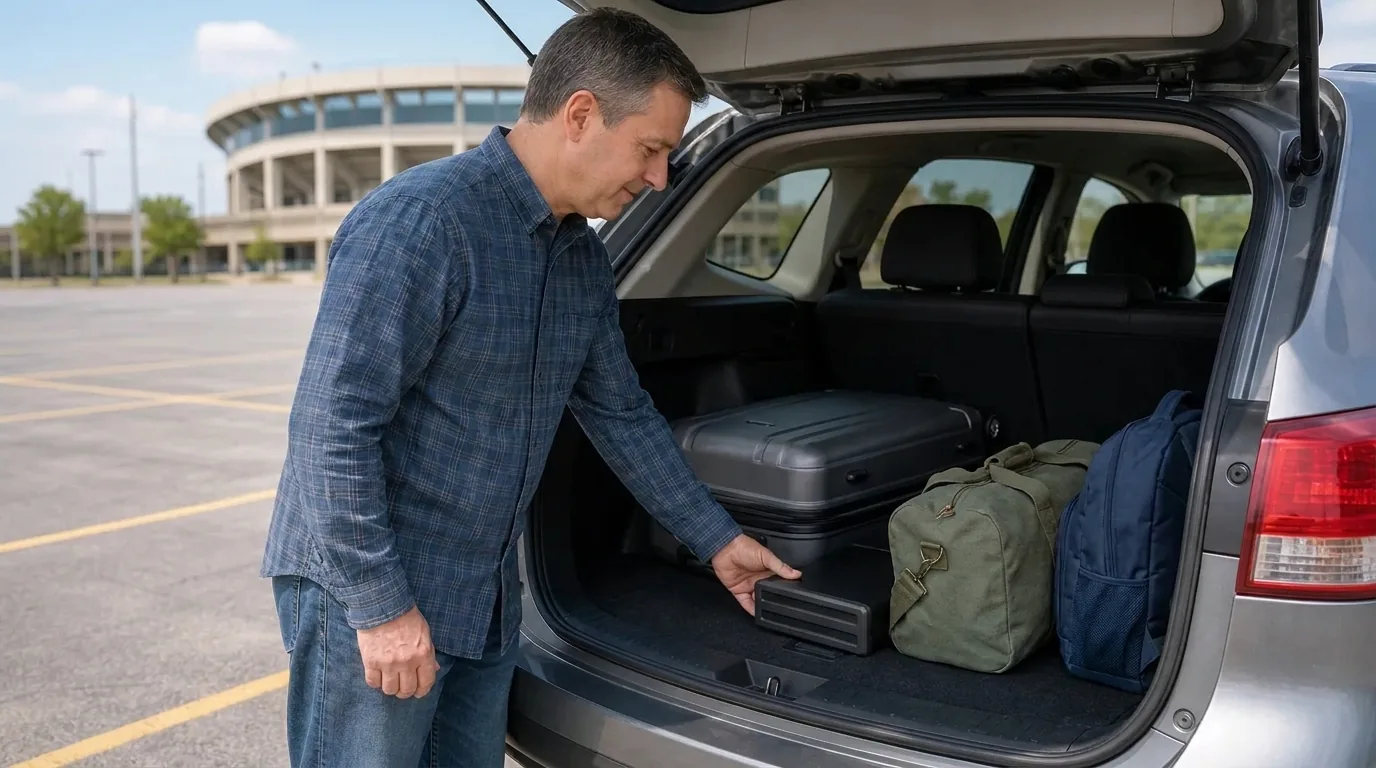
Whatever the rule, the method is the same. Store the gun before you arrive, in your own driveway or a quiet spot, in a locked container anchored to the car and out of sight. Handling a pistol in a busy lot, in view of everyone walking to the gate, is how a lawful errand turns into a 911 call. And if your vehicle is also where you sleep, at a campground inside a state park for instance, the rules shift again; our guide to whether an RV counts as a vehicle or a residence covers that case.
Private Property and Posted Signs
Everything above concerns places the government controls or regulates by category. Private property open to the public works differently. Since Wolford v. Lopez in June, the default is the traditional American one: you may carry into a store until the owner objects. We covered what that ruling changed and what it left alone.
It did not take away the owner’s say. A business can still post a sign or ask you to leave, and what that sign means depends entirely on your state. In some states walking past a compliant sign is a crime in itself; in others a sign is only a request until someone asks you to go and you refuse, at which point it becomes trespass. Texas requires exact wording, in English and Spanish, in one-inch letters. Our guide to whether no-guns signs have the force of law sorts the states into their four groups.
How to Check a Venue Before You Go
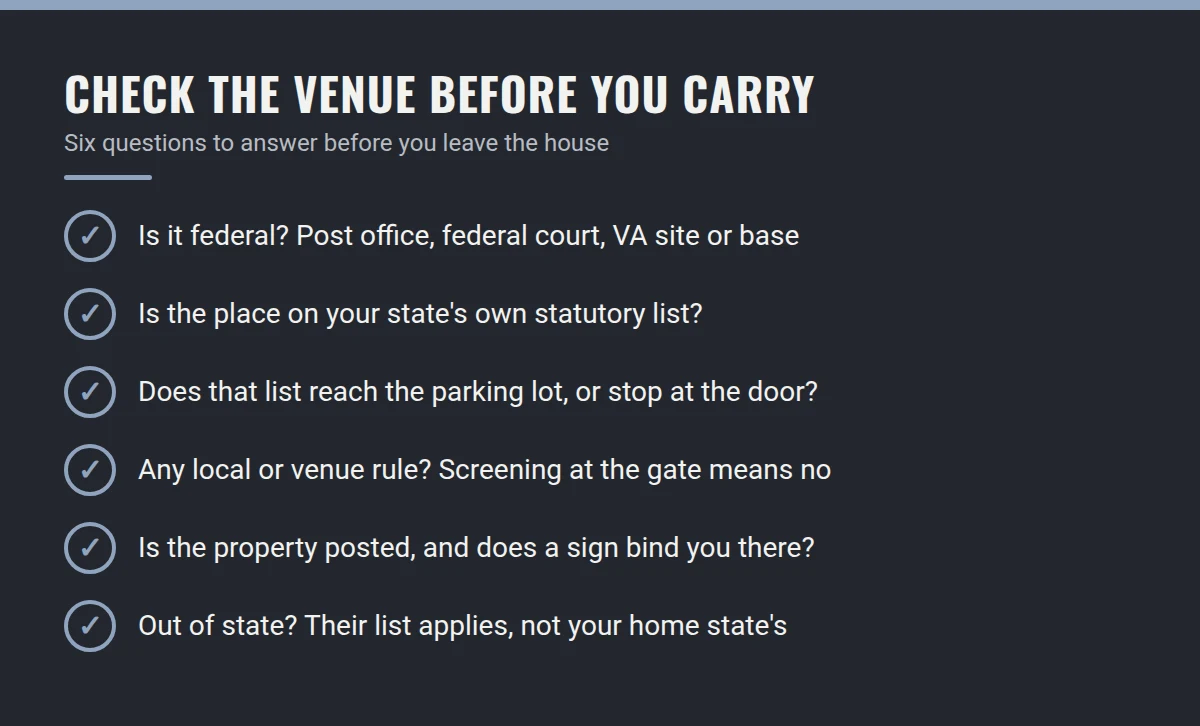
None of this needs to be memorized for all fifty states. It needs to be checked, for the place you are actually going, before you leave the house.
- Ask whether it is federal. Post offices, federal courthouses, Social Security and IRS offices, VA facilities and military bases follow federal rules that no state permit changes. Leave the gun at home, or locked in the car only where the lot itself is not federal property: a post office lot is postal property, and VA rules reach the grounds as well as the buildings.
- Find your state’s actual list. Read the statute, not a forum summary. Note whether a place is banned outright or only when posted, and whether the ban covers the building, the grounds, or the parking lot.
- Look for a local layer. Cities, counties, transit agencies and fair boards add rules of their own, within whatever room their state’s preemption law leaves them.
- Read the venue’s own rules. Stadiums, arenas, concert halls and fairs publish prohibited item lists. A metal detector at the gate, like the one at the Summit County Fair’s new entrance, means the gun does not come through that door, whatever the statute says about the parking lot.
- Check whether the property is posted, and what a sign means there. Then treat any request to leave as final.
- When you cross a state line, their list applies. Reciprocity lets your permit work in another state; it never brings your home state’s list of allowed places with it.
If any of those answers is unclear, the lawful default is simple: store the gun properly before you arrive, or leave it at home.
The Short Version
A carry permit, or a permitless right, covers public places in general, never every place. The federal list (post offices, federal buildings and courthouses, school zones, airport checkpoints) applies in all fifty states. Every state adds its own list, and the post-Bruen states added long ones. Courts have upheld the historical core and most of the new categories, struck down the private property default, and split on a handful, such as hospitals and public transit, while the Supreme Court decides whether to step in. The parking lot is often the answer, but only where your state’s law and the property owner allow it. Check before you go, store before you arrive, and leave when you are asked. Anything specific to your situation, your state or a place you have already carried into belongs in front of a firearms attorney, not a forum thread.
Further reading (sources)
- U.S. Supreme Court on the sensitive places passage in Bruen and the Hawaii private property ruling in Wolford v. Lopez
- Fox 8 Cleveland for the Summit County Fair’s new entrance hall and screening
- Statehouse News Bureau, via WYSU, with the attorney general’s opinion that county fairs cannot ban guns
- Cornell Legal Information Institute on the federal facilities statute, 18 U.S.C. 930
- Electronic Code of Federal Regulations for the Postal Service weapons rule, TSA’s checkpoint rule, the Army Corps of Engineers lake rule and the VA property rule
- Duke Center for Firearms Law on the Tampa ruling that dismissed a post office charge
- Federal district courts in the Fort Worth judgment against the post office ban and the Connecticut ruling upholding it
- National Park Service explains which park buildings stay off limits
- Joint Base Lewis-McChord sets out why state carry permits are not valid on base
- U.S. Court of Appeals for the Second Circuit on New York’s location list in Antonyuk and the Times Square and subway bans in Frey
- U.S. Court of Appeals for the Ninth Circuit with its rulings on California’s and Hawaii’s lists
- U.S. Court of Appeals for the Fourth Circuit upholding most of Maryland’s list and Fairfax County’s park ban
- U.S. Court of Appeals for the Third Circuit with the order vacating the New Jersey panel ruling for rehearing
- SCOTUSblog for the Illinois transit case the Court declined to hear
- Supreme Court dockets tracking the pending petition on Maryland’s list and the New York parks petition
- State legislatures for the state rules quoted here: Texas Penal Code 46.03, Illinois’s prohibited areas, Ohio R.C. 2923.126, archived, Kansas’s building security rule and Arizona’s weapon storage rule
- New York State Senate on the sensitive locations list and the vehicle storage rule
- New Jersey Legislature with the 2022 carry law as enacted, archived
- FindLaw reproduces California Penal Code 26230