Winter Concealed Carry: Coats, Layers, Gloves, and the Draw Nobody Practices
Published on September 14, 2026
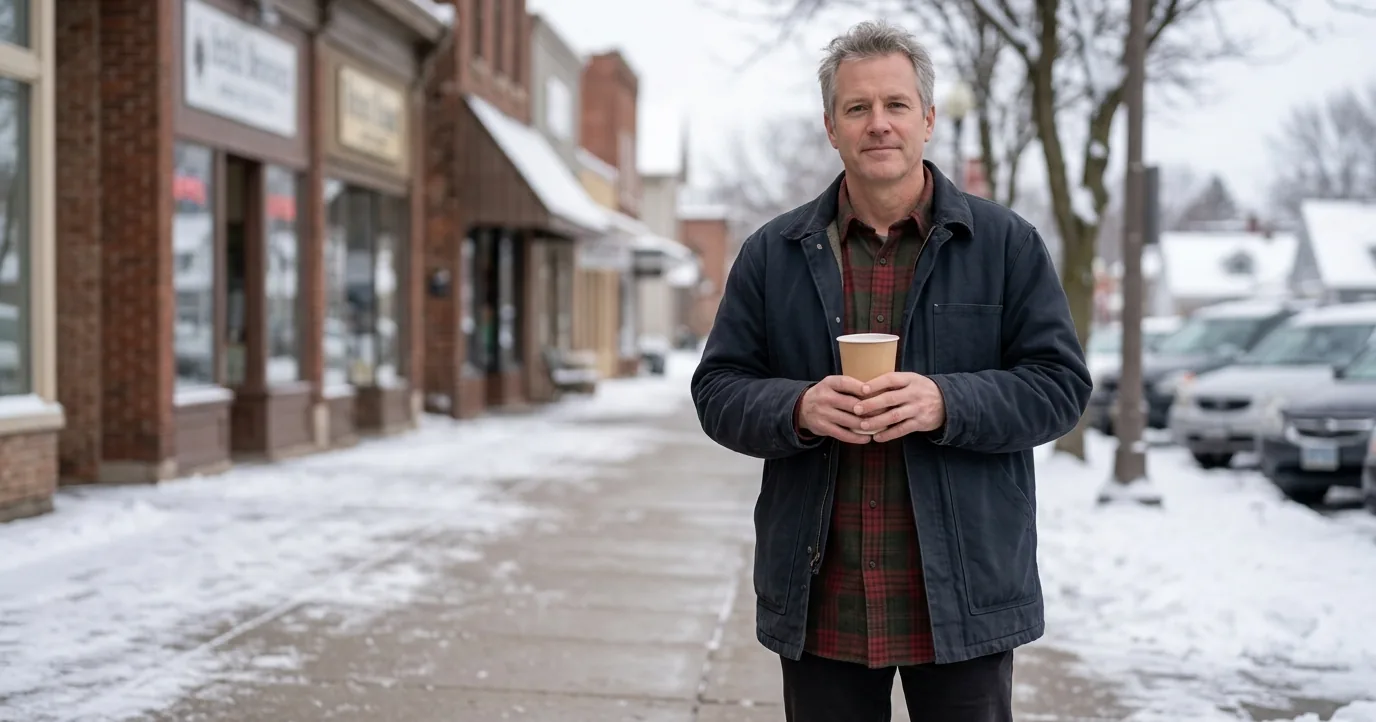
Every year around the first hard freeze, a quiet thing happens in the concealed carry world. People stop carrying. Not on purpose, and not all at once. The parka comes out of the closet, the belt rig suddenly sits under three layers of fabric, the first attempt at a draw in the driveway feels ridiculous, and the gun starts staying in the safe on short trips. By February it is staying home most days. Nobody announces this. They just quietly become a summer carrier.
That is backwards, because winter is the easiest season to hide a handgun and one of the seasons you are most likely to need one. Dark at five in the afternoon, crowded parking lots, cars idling at gas pumps, hands full of bags. The problem was never concealment. It is access, and access is a solvable equipment and practice problem rather than a reason to disarm.
The Coat Solves One Problem and Creates a Harder One
A winter coat is the best cover garment you will ever own. A full size pistol at four o’clock that would print through a summer t-shirt vanishes completely under a canvas jacket. Nobody is looking for a gun on somebody wearing a parka, and nothing about your outline suggests one.
Then you try to get to it. The outer shell is zipped, maybe buttoned over the zipper, maybe damp and stiff from sleet. Under that is a fleece. Under that is a sweater. Your cover garment is no longer one thin layer you flick aside with two fingers, it is a system with mass, and heavy fabric falls closed the instant you let go of it. The NRA’s own winter guidance puts a belt holster draw under a short coat at roughly two and a half to three and a half seconds when the coat has to be pulled up first, against a fraction of that from a pocket. Those are not tactical fantasy numbers, they are what an ordinary person actually does in a parka.
The fix is to treat winter as its own carry setup rather than the summer setup with a coat thrown over it. Different layer order, sometimes a different position, sometimes a different gun, and a block of practice that belongs on the calendar before the weather arrives.
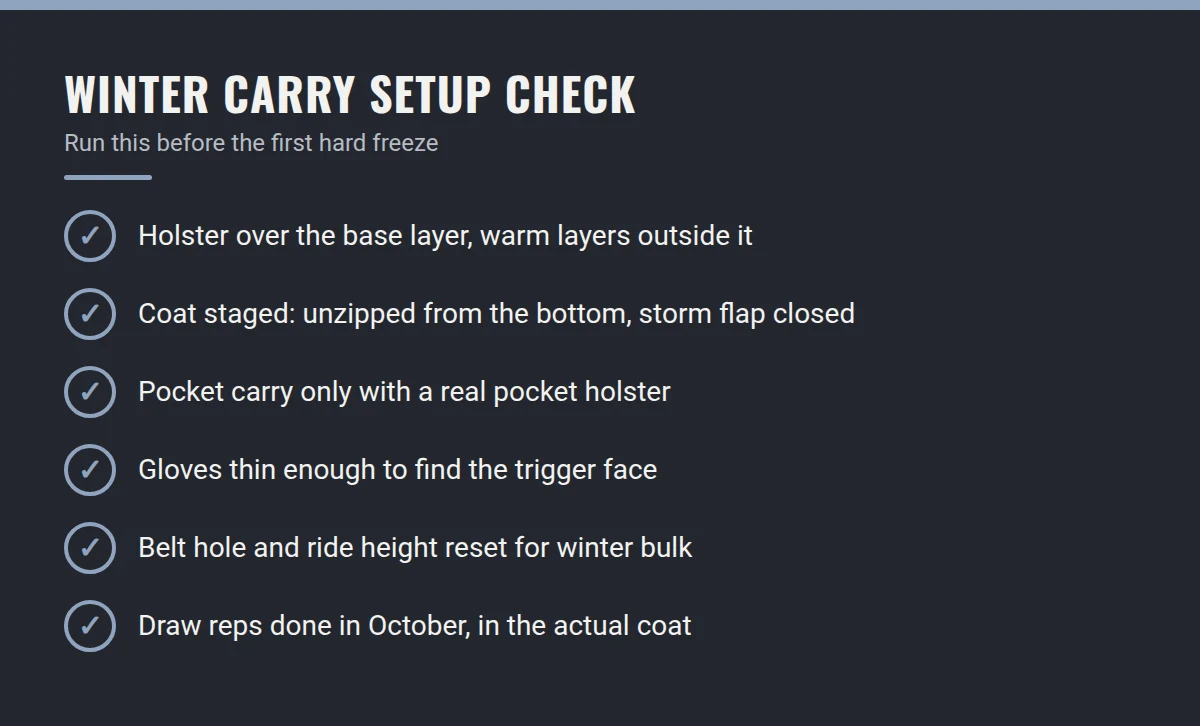
Layer Order: The Gun Rides Against the Base Layer
The single most common winter mistake is burying the holster. People put on a t-shirt, a thermal, a sweater, then clip the holster over all of it, then add a coat. Now the gun sits on the outermost soft layer, prints against the coat, shifts as the sweater moves, and sits behind nothing useful.
Reverse it. The holster goes on over your base layer, directly against the thermal or t-shirt, and every warm layer goes on outside the gun. That keeps the pistol tight to your body where it conceals best, gives the holster something stable to clamp to, and means the sweater is now part of what you sweep rather than part of what you are wearing under the gun.
Two material notes matter here. Fleece and sherpa next to a holster grab at everything: they catch on the front sight on the reholster, they bunch at the beltline, and they hold the mouth of a soft holster closed. Smooth base layers behave far better. And check your outer garment for interior drawstrings, the cords that cinch a coat’s hem or waist. A loose cord near your waistband is exactly the sort of thing that finds a trigger guard while you push a gun back into a holster, which is the moment most carry related negligent discharges actually happen. Cut them out or reroute them. Our complete holster guide covers why reholstering slowly, with everything cleared, is the habit that matters most.
Clearing a Garment That Is Zipped Shut
Your coat spends the day in one of three states, and you should know which one you are in.
Open is the simplest and the fastest. A coat left hanging open is barely different from a summer cover garment. The cost is that you are cold, so this works for a walk across a parking lot and not for a day outdoors.
Staged is the setting most winter carriers should live in. Unzip the coat from the bottom up to about chest height, then close the storm flap over it with its snaps or velcro. It reads as a normally closed coat from the outside, the wind stays out, and the entire lower half is already open. PHLster teaches exactly this as the default winter configuration, and it removes almost all of the time penalty for very little comfort cost.
Fully closed is the hard case, and it deserves practice precisely because it is the one that happens when the weather is worst. The technique is not delicate. Grab a full fist of coat, not a pinch of fabric, and rip it up and out with an exaggerated motion, taking the midlayer with it. Small polite movements fail because the hem has weight and falls straight back over the grip of the gun. Continue holding the garment clear with that hand until the gun is out.
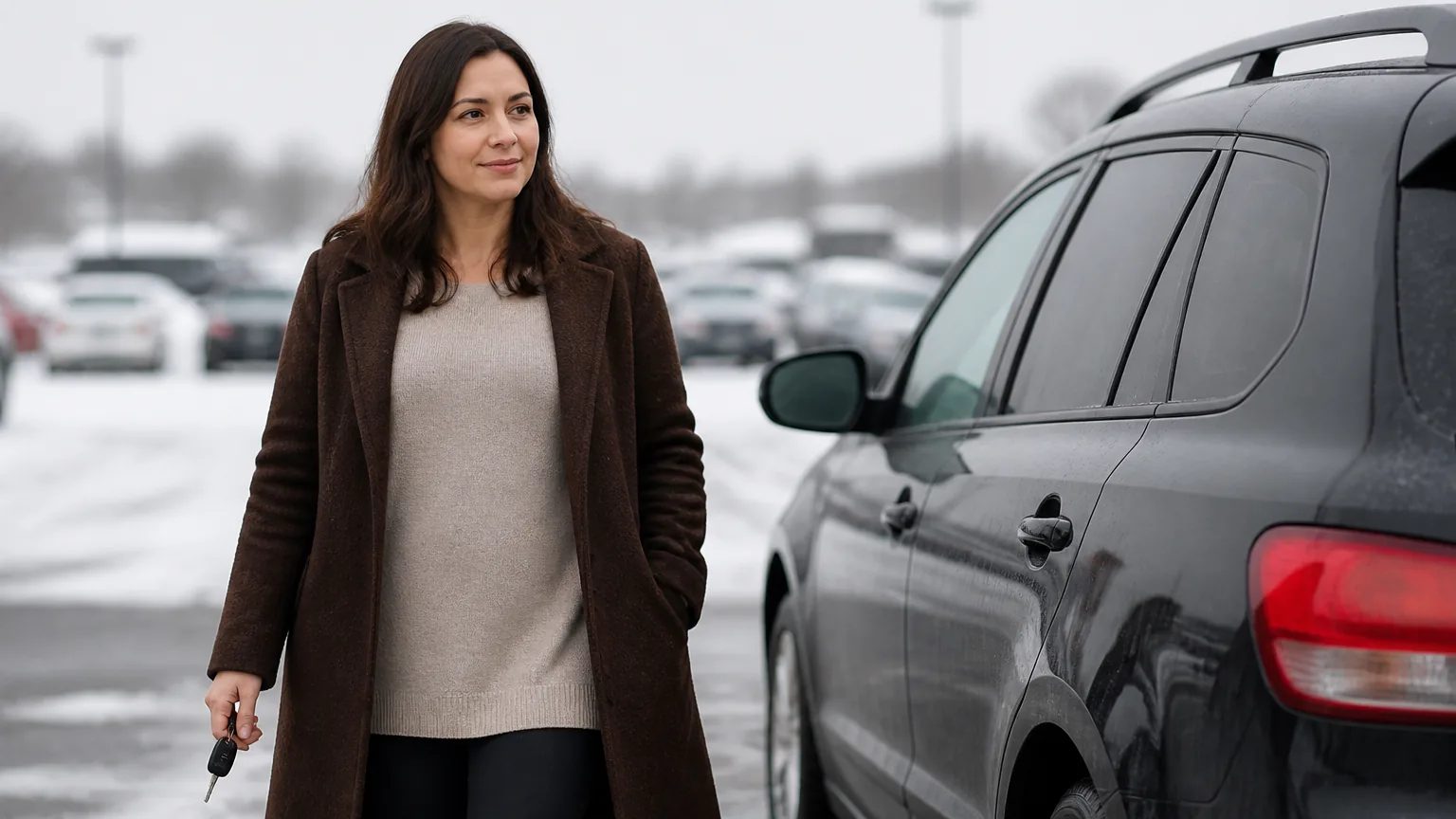
Two adjustments make all of this easier. Appendix carry shortens the whole problem, because the gun sits near the coat’s opening and your hand travels a shorter distance through less fabric. And practice the one handed version, where your support hand is holding a child, a bag, or a door, because that is the realistic winter scenario and it changes the clearing motion completely.
Pocket Carry, Done Properly
Pocket carry is the fastest access most people have in winter, and it is also the method most often done wrong.
Done properly means a real pocket holster, every time. The holster covers the trigger guard completely, breaks up the pistol’s outline so it does not read as a gun through the fabric, holds the gun at a consistent angle, and stays in the pocket when the gun comes out. A pistol dropped loose into a pocket does none of that. It rotates muzzle up, tangles in the liner, collects lint in the action, and presents you with a grip you cannot find in a hurry.
The rest of the rules are short and not negotiable. The gun’s pocket holds the gun and nothing else, so no keys, no phone, no spare gloves. The pocket has to be deep and sturdy enough to retain a pistol when you bend, sit, or run, which rules out shallow slash pockets on a lot of jackets. And pocket carry means a genuinely small gun, a pocket .380 or a small revolver, not a compact you have decided to be optimistic about.
There is one more consideration that gets people, and it is about coats rather than guns. A coat comes off. You take it off at a restaurant, you hang it in someone’s entryway, you throw it in the back seat. If your gun lives in the coat pocket, your gun just left your body and went somewhere you are not, which is an unsecured firearm problem and in some places a legal one. If you carry in a coat pocket, that coat stays on, period. A front trouser pocket does not have this failure mode, and that is a real argument for it.
Gloves: The Part Nobody Tests
Gloves cause two separate problems and most carriers have tested for neither.
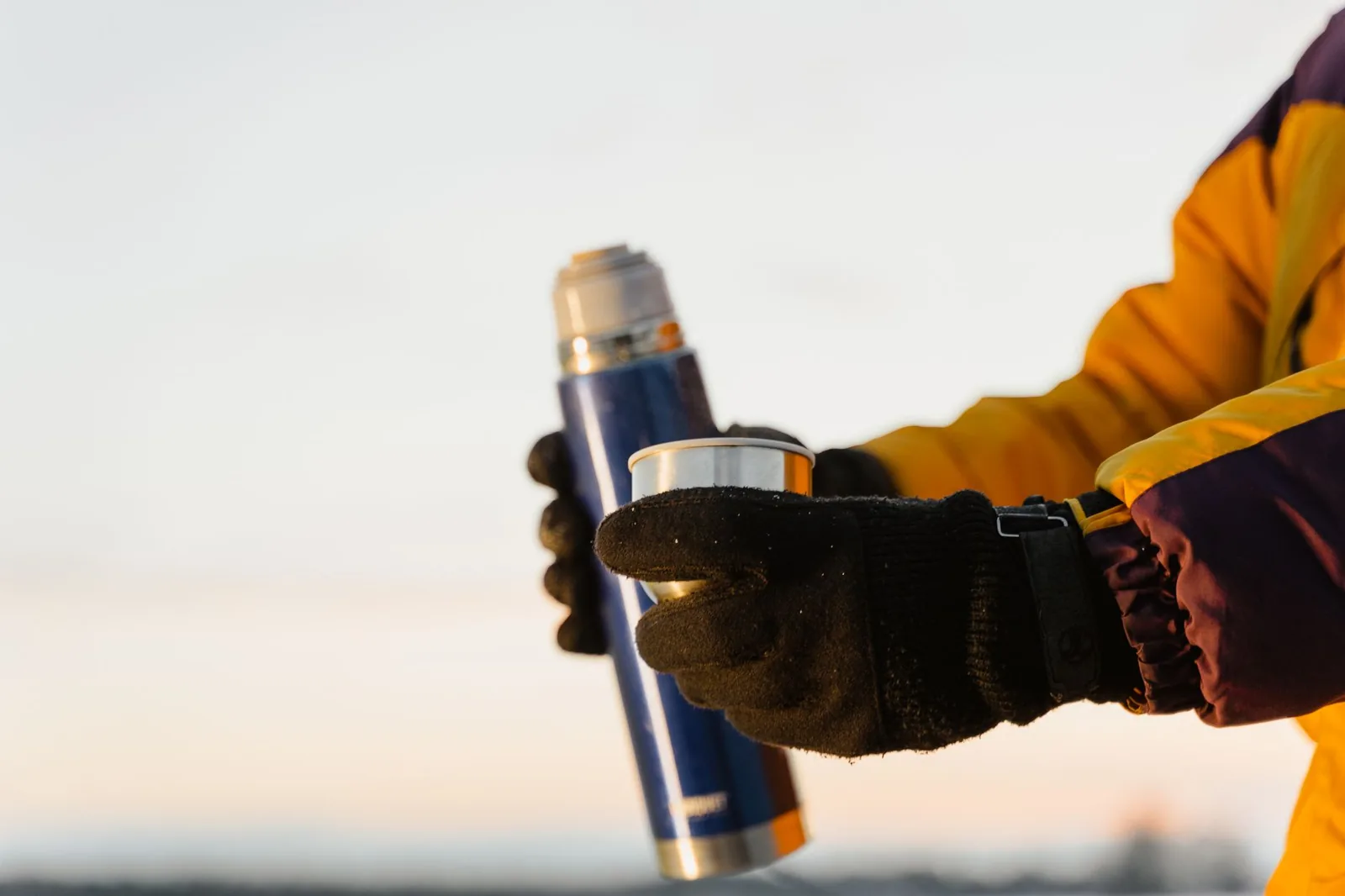
The first is grip. A loose department store glove slips on the backstrap under recoil and turns a firm firing grip into a sloppy one, which is a straight path to the induced malfunctions covered in our guide to diagnosing and clearing stoppages. Winter gloves for carry need to fit tighter than gloves you bought to shovel a driveway, with a palm material that actually adheres.
The second is your trigger finger, and it is the serious one. A gloved finger has to enter the trigger guard cleanly and land on the face of the trigger. If the glove is bulky, the finger arrives crowded against the inside of the guard and you end up pressing the guard instead of the trigger, or worse, pressing sideways on the trigger without feeling it. Small revolvers are the worst offenders here because the guard is tight to begin with. Reduced tactile feedback compounds it, because a gloved hand cannot feel a shirttail in the trigger guard on the way back into the holster.
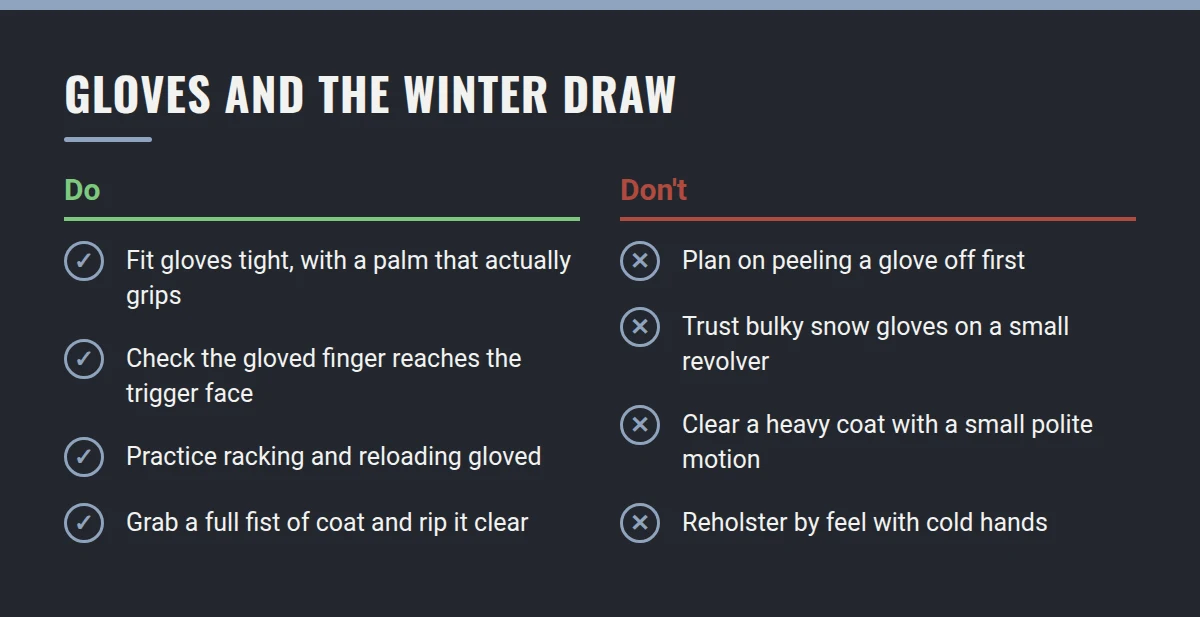
Test it deliberately, with the gun triple checked empty and no ammunition in the room. Put the gloves on. Draw, build a firing grip, find the trigger, work the magazine release and the slide stop, rack the slide, and reholster. If any of that fails, the answer is thinner gloves, not a plan to take them off, because peeling a snug glove takes longer than anything else in the sequence.
Belt, Holster, and the Rest of the Rig
Bulk changes fit in ways that are easy to miss. The belt hole you use in July is not the hole you use in January over a thermal layer, so find the winter setting now and mark it rather than discovering it in a parking lot. Ride height often wants to come up slightly, because a gloved hand needs more room to get a full grip. Claw and wedge tuning shifts too, since the extra layer under the belt line changes the angles that were dialed in for a t-shirt.
Vehicles are their own winter problem. A heavy coat plus a seatbelt buries a waistband gun under more material than you can clear while seated, which is one more reason to sort out where the gun rides when you drive. Our guide to carrying a gun in your vehicle works through the on body versus vehicle storage question in detail. And if winter travel means a flight rather than a drive, checked baggage is a different rulebook entirely, which we cover in our walkthrough of flying with a handgun.
Resist one temptation. A heavy coat will hide a much bigger pistol, and it is tempting to size up for the season. Concealment is not the constraint in winter, access is, so a bigger gun buried deeper is usually the wrong trade.
Do the Reps in October
Winter carry skills are trainable and they take very little time, but the window for building them is before the season, not during it.
Dry practice is most of the work. With the pistol confirmed unloaded and all ammunition out of the room, put on the actual coat and the actual gloves and run slow, deliberate repetitions: clear the garment, draw, reholster while looking the gun into the holster. Ten minutes a few times a week in October will do more for your January draw than any gear purchase. Add one live fire session in real cold, outdoors, in the clothing you will actually wear, so you find out how your grip and your gloves behave when your hands are genuinely cold rather than theoretically cold. A structured plan helps here, and our 12 month training roadmap lays out how seasonal work fits into a year of practice.
The last habit is the cheapest. Once a day, in whatever you are wearing, do one slow draw at home. That single rep is what catches the new coat with a stiff zipper, the sweater that bunches, the glove that no longer fits over a bandaged finger.
The Honest Standard
Here is the test that settles whether your winter setup is real: can you clear your cover garments and get a firing grip, slowly and safely, in the clothes you have on right now? If the answer is no, the problem is the setup, not the season, and it is fixable in an afternoon of rearranging layers and a few weeks of short practice sessions. Winter asks more of a carrier than summer does. It is also the season where the gun most deserves to still be on your belt.
Further reading (sources)
- PHLster Holsters on staging a jacket so a closed coat still draws fast
- NRA Family for how coat style and holster choice change your draw time
- The Armory Life with why cold weather makes carrying harder rather than easier
- Holster Central on what gloves do to trigger control and grip
- USCCA for a practical rundown of cold weather carry adjustments
- Sticky Holsters with the case for pocket carry when the coats come out