North Carolina's SB50 Override Fight: What a Permit Repeal Would Actually Change
Published on June 17, 2026

North Carolina has spent more than a year on the edge of becoming the 30th permitless carry state, and the deciding vote keeps getting pushed down the calendar. Senate Bill 50, formally titled Freedom to Carry NC, would eliminate the requirement that a resident obtain a permit before carrying a concealed handgun. The state Senate has already overridden Governor Josh Stein’s veto. The House override vote is the last domino, and as of this writing in mid-2026 it remains unresolved after being rescheduled repeatedly. Whether you support the bill or oppose it, the practical question for anyone who carries in or travels through North Carolina is the same: what would actually change on the ground? This guide walks through the answer, and where the popular framing of the fight gets the details wrong.
What SB50 Actually Does
Under current North Carolina law, getting a concealed handgun permit means clearing a specific set of hurdles. You must be at least 21, complete a state-approved firearms safety course that includes live-fire instruction, pay an $80 fee, meet residency requirements, and pass a background check administered through your county sheriff. The permit is the government’s sign-off that you have met those conditions.
SB50 removes that gate. It would let anyone 18 or older who would otherwise qualify for a permit carry a concealed handgun without obtaining one. No mandatory course, no fee, no application. Primary sponsor Senator Eddie Settle framed it as a simple proposition: “SB50 offers concealed carry without a permit to anyone who would otherwise qualify for a permit if they applied, and they will be able to carry in all the same places as if they had a permit.”
The critical detail that gets lost in the headlines: the bill does not abolish the permit. It makes the permit optional. North Carolinians could still apply for a concealed handgun permit through their sheriff exactly as they do today, and as you will see below, there are concrete reasons many of them should.
Where the Override Fight Stands
The legislative path has been anything but smooth. SB50 passed both chambers in 2025 and was vetoed by Governor Stein. The Senate, which had originally passed it by a veto-proof margin, overrode the veto. The House is where the math gets tight. Two Republicans voted against the bill on its second reading, which means House leadership needs every remaining Republican plus at least one additional vote to reach the three-fifths majority of members present and voting that an override requires.
That narrow margin is why the override vote has been postponed again and again, by some counts nine times or more. House Speaker Destin Hall has said he sees a path forward to bringing SB50 to the floor, and the opposition is not sitting still. In Raleigh, gun violence prevention groups including North Carolinians Against Gun Violence, Moms Demand Action, Giffords, and the Johns Hopkins Center for Gun Violence Solutions have rallied to preserve the permit law, putting shooting survivors front and center. The result is a standoff that could break either way.
SB50 and the Pistol Purchase Permit Are Not the Same Thing
Here is where a lot of coverage muddies the water. North Carolina actually has (or had) two separate permit systems, and people routinely conflate them.
The first is the pistol purchase permit, which governed buying a handgun. That system is already gone. The legislature repealed it in 2023 through Senate Bill 41, overriding Governor Roy Cooper’s veto. Since then, buying a handgun in North Carolina runs through the federal NICS background check alone, with no separate trip to the sheriff for a purchase permit.
The second is the concealed handgun permit, which governs carrying concealed. That is what SB50 targets. So the accurate way to understand the moment is this: North Carolina already removed the front-end check on buying a pistol back in 2023, and SB50 would now remove the permit requirement for carrying one. If the override succeeds, the state will have stepped back from both. The pistol purchase permit is not “under threat” in 2026; it has been gone for three years. Keeping the two straight matters, because they affect completely different parts of the process.
What Changes for Residents Carrying at Home
For a resident carrying inside North Carolina, the most visible change is who may carry and what it costs. Adults 18 to 20 could legally carry concealed for the first time, and no one would be required to take a class or pay a fee before doing so.
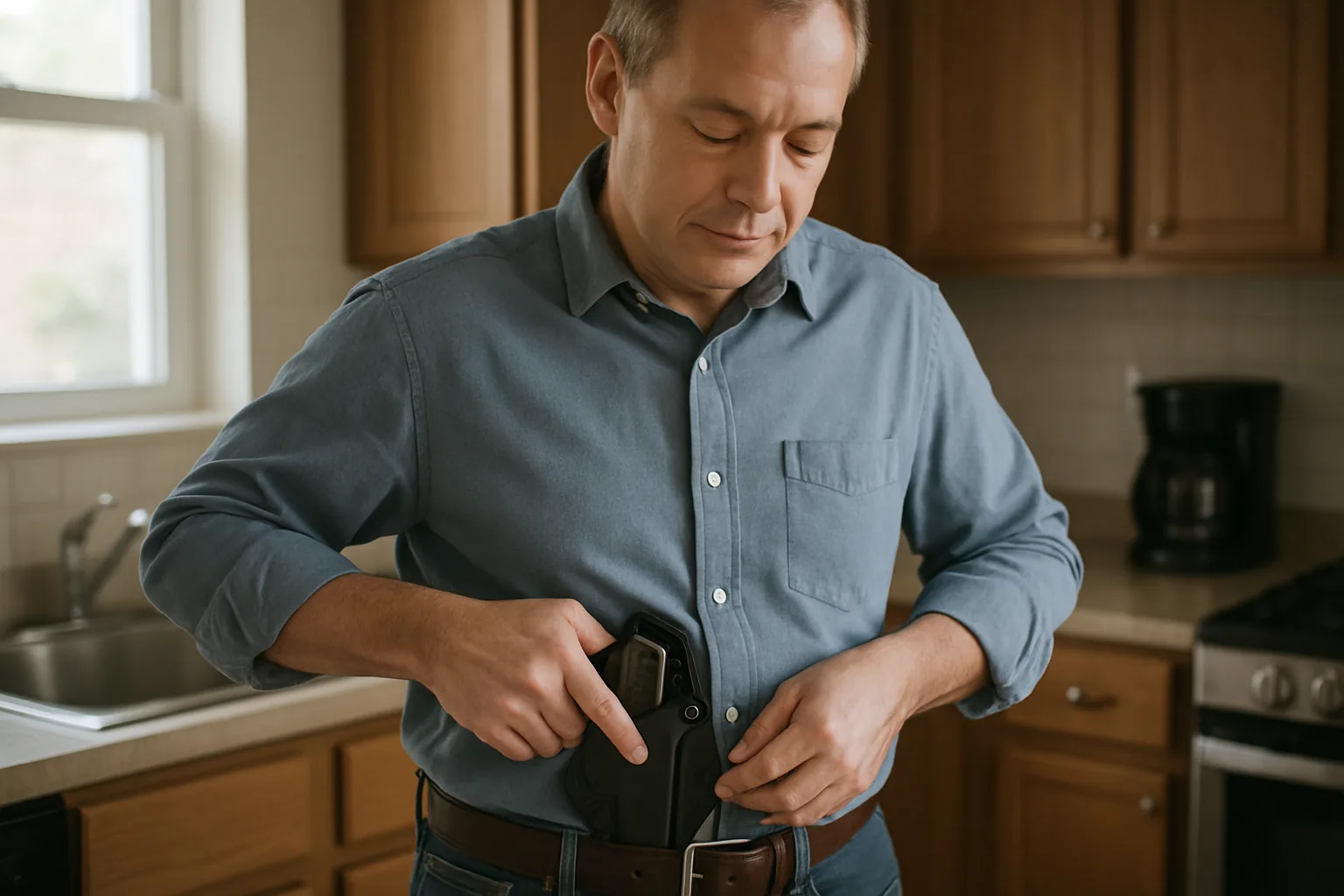
What does not change is where you may carry. A permit repeal does not unlock prohibited places. Schools, courthouses, federal buildings, and private property posted against firearms remain off limits, and the use-of-force rules that govern when you may lawfully draw or fire are untouched by SB50. If you are fuzzy on those rules, they deserve their own study; start with our use of force legal primer for concealed carriers and the broader state laws and training requirements guide. Permitless carry changes the paperwork, not the law of self defense.
What Changes at the State Line: Reciprocity
This is the part that catches travelers off guard. Permitless carry only operates inside the state that passed it. The moment you cross into another state, your legal authority to carry depends on that state’s rules and on whether it honors a North Carolina permit.

A North Carolina concealed handgun permit is recognized through reciprocity agreements in roughly three dozen states. If you carry on the strength of SB50 alone, with no permit in your wallet, you have nothing for a neighboring state to recognize. Cross into Virginia, South Carolina, or Tennessee without that permit and you are subject to each state’s own carry laws, several of which still require a recognized license. This is the single strongest argument for treating the SB50 permit as optional in name only: if you ever drive out of state armed, the permit is what keeps you legal at the line. Keep yours current, or get one.
What Changes at Federal Locations: The School-Zone Trap
Federal law sits above any state permit decision, and one federal statute makes the optional permit quietly important. The Gun-Free School Zones Act bars possessing a firearm within 1,000 feet of a K-12 school, a radius that in populated areas covers a surprising amount of ground. The law carries a narrow exemption for someone licensed to carry by the state where the school sits, provided the state verified the person’s qualifications before issuing that license.
A permit issued after a background check fits that exemption. Permitless carry does not, because there is no license and no state verification step. In plain terms, a North Carolinian carrying under SB50 with no permit could lose the school-zone exemption that an actual permit would have preserved. The optional permit closes that gap. For the full federal picture, see our federal firearms law reference for concealed carriers, and treat any specific school-zone question as one for a firearms attorney rather than a blog.
Permitless Does Not Mean Train-Less
Strip away the politics and one fact survives intact: removing the training mandate does not remove the need for training. The legal floor drops; the responsibility floor does not move at all. Shooting survivor John Owens put the fear bluntly at the Raleigh rally, warning that an 18-year-old carrying with no instruction “other than maybe the video game they’re playing at home” is a danger to the public. Even Paul Valone of Grass Roots North Carolina, a leading voice for the bill, says he encourages safety training; he simply does not believe it should be mandatory.
That is the gap an individual has to close on their own. Research from the Johns Hopkins Center for Gun Violence Solutions has linked the spread of untrained public carry with measurable increases in firearm assaults, which is exactly the outcome serious instruction is meant to prevent. If SB50 passes, the smart move is to behave as though it had not: enroll in a quality in-person course anyway, build real skills on a structured plan like our 12-month training roadmap for new carriers, and know what to expect before you go by reading our first concealed carry course guide. The handgun you carry deserves the same deliberate choice; our 2026 concealed carry handgun roundup is a sound place to start.
The Bottom Line
SB50 would lower the barrier to carrying concealed in North Carolina, not the bar for doing it responsibly. If it becomes law, the optional permit remains the right call for almost anyone who travels across state lines or lives near a school, and voluntary training stops being a requirement only on paper. Watch the House calendar, verify the rules every time you cross a state border, and remember that a permit repeal is a change in process, never a substitute for competence.
Further reading (sources)
- ABC11 Raleigh-Durham on the opponents focusing on a possible SB50 override vote
- NC Newsline for the campaign to preserve North Carolina’s concealed weapons permit law
- Wake Forest Law Review with a breakdown of why SB50 stayed stuck in legislative limbo
- USA Carry on how the override hinges on a single House vote
- WECT for North Carolina’s 2023 repeal of the pistol purchase permit
- FOX8 WGHP explains what the pistol purchase permit repeal actually means for buyers
- Johns Hopkins Center for Gun Violence Solutions on the regulation and consequences of public firearm carry