Handgun Malfunctions: The Complete Diagnostic and Clearing Guide
Published on September 10, 2026
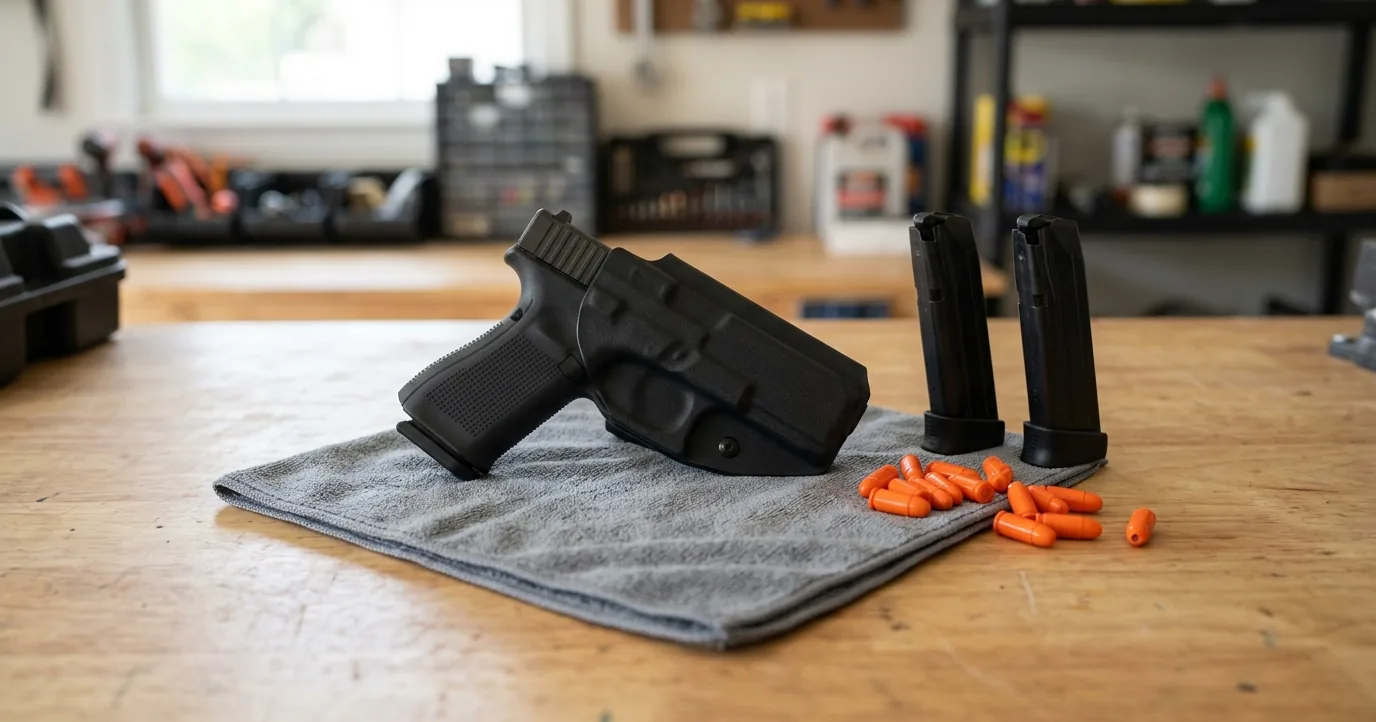
Your permit class almost certainly ended with a qualification course of fire, and the gun almost certainly worked. Fifty rounds, no drama, certificate in hand. What nobody did was make your pistol stop working on purpose and then stand there while you figured out what to do about it. That is a gap worth closing, because a semi-automatic pistol is a machine with a feeding cycle, and feeding cycles fail. When one fails on a square range it costs you a few seconds and some pride. When one fails at the moment you need the gun, the only thing standing between a dead pistol and a working one is a motor program you built ahead of time.
What Actually Stops a Pistol
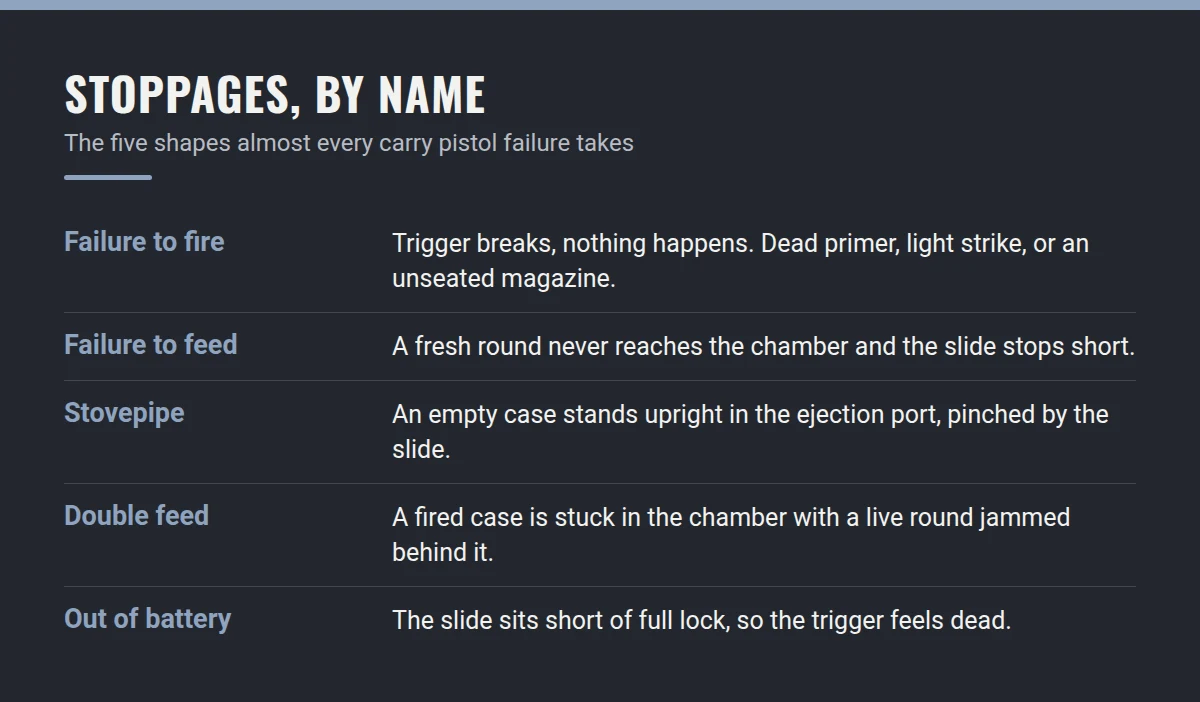
Almost every stoppage on a carry-sized semi-auto falls into a handful of shapes, and you diagnose them the same way a mechanic does: by what you see and what you feel, not by what you assume.
A failure to fire is the one that announces itself with a click instead of a bang. The trigger released the striker or hammer, and nothing happened. Causes range from a dead or high primer to a light primer strike (a tired striker spring or a fouled firing pin channel) to a magazine that was never fully seated, which means the chamber was empty the whole time.
A failure to feed is a fresh round that never made it into the chamber, usually nose-down against the feed ramp or hung up on the barrel hood. The slide stops short and the gun is dead in your hand.
A failure to eject, better known as a stovepipe, is the one everybody can identify from across the room: an empty case standing upright in the ejection port, pinched by the slide as it tried to close. The case did leave the chamber. It just never left the gun.
A double feed (many instructors call it a Type 3) is the ugly one. The fired case is still stuck in the chamber because the extractor did not pull it out, and the magazine has already pushed a live round up behind it. Two pieces of brass are now fighting for one hole. Racking the slide will not fix it, and racking harder will not either.
Out of battery covers anything that leaves the slide short of full lock. On most modern carry pistols the trigger will simply feel dead, because the gun is designed not to fire until it closes.
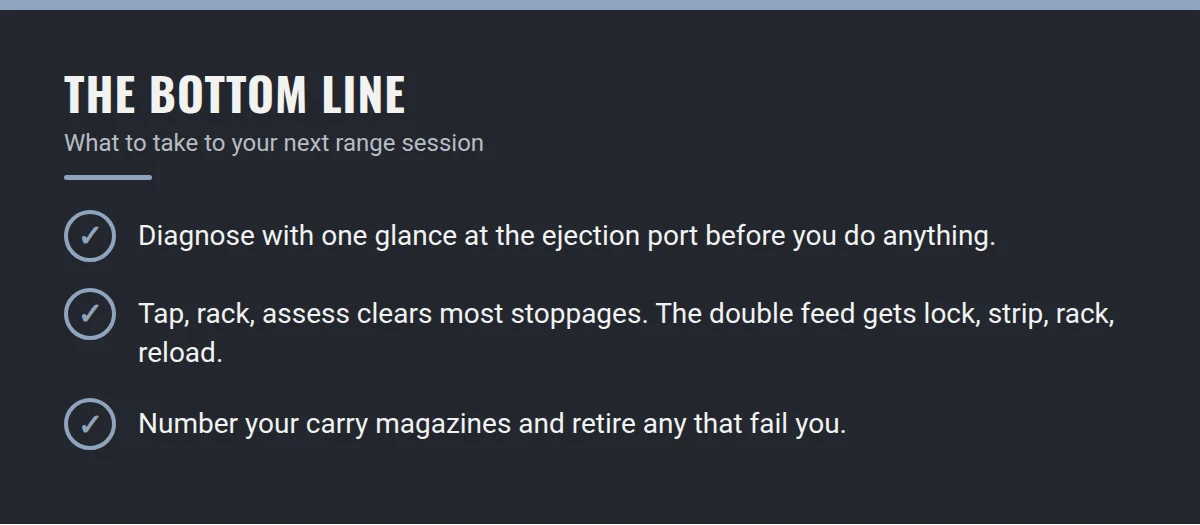
The tell that saves you time is the visual. If the ejection port has something sticking out of it, you have a stovepipe or a double feed. If the port looks normal and you got a click, you have a failure to fire. That single glance decides which drill you run.
Tap, Rack, Assess Handles Most of Them
One response covers the failure to fire, the failure to feed, and the stovepipe, which is most of everything you will ever encounter.
Tap. Strike the magazine floorplate with the heel of your support hand, firmly, like you mean it. An unseated magazine is a shockingly common cause of a click, and the tap either fixes that or costs you nothing.
Rack. Grip the rear of the slide overhand, fingers over the top, and run it all the way to the rear, then let go completely. Do not ride it forward. The recoil spring closes the slide faster and harder than your hand can, and slide velocity is what strips and chambers a round. This is where people fail: a short stroke leaves the gun in the same condition it was already in, or worse. Rolling the pistol so the ejection port faces the ground while you rack lets gravity help the offending case fall clear.
Assess. Not “bang”. Look at what is actually in front of you and decide whether you still need to shoot, because circumstances change during the two seconds you spent looking at your gun. Training that ends in an automatic shot teaches you to fire at a problem that may have already resolved, and that is a legal disaster as much as a tactical one. The standard for pressing the trigger does not relax because you just cleared a jam, which is worth rereading in our use of force legal primer.
Done properly on a gun you have practiced with, the whole sequence takes about a second and a half and does not require you to look at the pistol for most of it.
The Double Feed Needs Its Own Drill
This is the stoppage that beats people, because the instinctive response (rack it again) makes it worse and burns the time you do not have.
The two-handed clearance goes: lock, strip, rack, reload, assess.
Lock the slide to the rear. On a badly bound gun you may have to work the slide slightly forward first to take pressure off, then push the slide stop up. Strip the magazine out. Do not tug politely at it; it is usually wedged, so grip the floorplate and rip it straight down and out. If it is your only magazine, keep it pinned under your fingers rather than dropping it. Rack the slide three times briskly to shake both pieces of brass free. Insert a magazine, rack once to chamber, and assess.
The one-handed version matters more than most carriers think, because your support hand may be holding a child, pushing someone behind you, or simply not working. Hook the rear sight on your belt line, the edge of your holster, a door frame, a car door, or the sole of your shoe to lock the slide back and to cycle it. Strip the magazine with the same hand that is holding the gun. This is precisely why a squared-off rear sight with a flat forward face is worth paying for, and why a rounded, snag-free rear sight is a trade rather than a free upgrade. Practice it on both sides. You do not get to pick which hand is available.
Root Cause One: The Magazine
When a gun starts misbehaving, the magazine is the first suspect and, statistically, usually the guilty one. It is the only part of the feeding system that is loose, disposable, dropped on concrete, and stored under pressure.
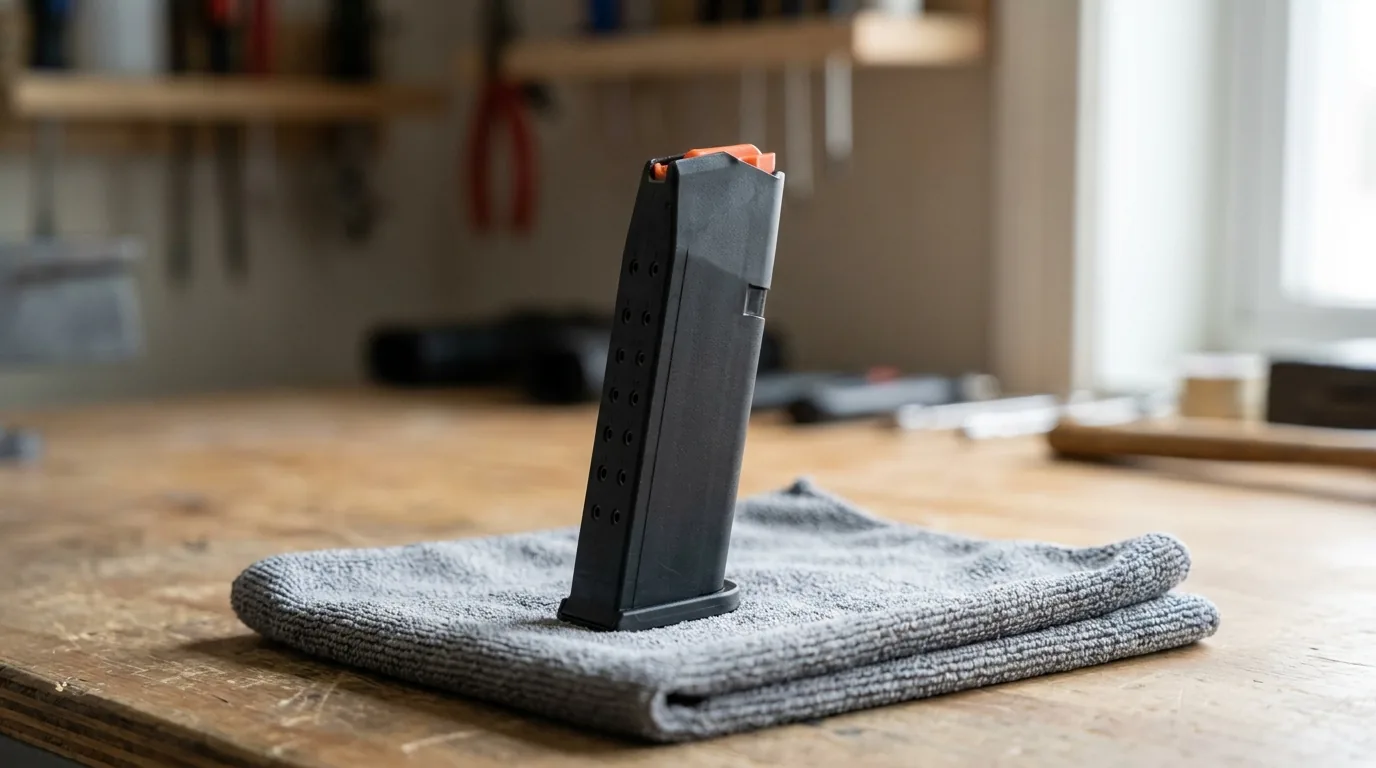
The details that matter are unglamorous. Feed lip geometry controls when and at what angle the top round releases, and bullet profile interacts with it: round-nose ball feeds in almost anything, while flat-profile target rounds and some defensive hollow points need a release point the magazine was actually designed for. The follower works with the feed lips to position each round and to trip the slide stop on the last shot, and followers should not be swapped between brands, because each is shaped to its own magazine body.
Springs are the real variable. As American Rifleman’s George Harris put it while diagnosing a collection of unreliable 1911s, magazine spring strength has to be compatible with the pistol’s recoil spring so the slide picks up the top round at the right instant. Get that timing wrong and you can produce a double feed at one end of the spectrum or an empty chamber at the other. Old springs that have been cycled hard lose pressure and become replacement candidates. Dirty magazines induce failures in any firearm.
The practical version: number your carry magazines with a paint pen, and when one produces a failure, note which one. Retire misbehaving magazines to practice duty or the trash rather than rotating them back into carry. Do not carry the beat-up magazine that lives loose in the bottom of your range bag. And clean the inside of a magazine occasionally, which for most designs means popping the floorplate and wiping the body dry, with no oil inside where it will collect grit.
Root Cause Two: Springs, Lubrication, and Ammunition
Recoil springs wear out. Manufacturers typically list service intervals in the low thousands of rounds, and subcompacts sit at the shorter end because their springs are stiffer and travel less. A tired recoil spring lets the slide slam harder and return more slowly, which shows up first as inconsistent ejection.
Lubrication is a Goldilocks problem for a carry gun. Too dry and the slide short-cycles when everything else is marginal. Too wet and the oil collects lint, dust, and pocket debris, which is a genuine issue for anyone carrying in a pocket or under a shirt all summer. A light film on the rails, barrel hood, and outside of the barrel is enough for most designs.
Ammunition is the last of the three. Your gun does not owe reliability to a bullet profile it has never seen. Before any load rides in your holster, run at least a full box through the exact gun, from the exact magazines you carry, and confirm it feeds and ejects cleanly. Real Avid’s Range Ready series with Doug Koenig frames the entire idea nicely: confidence with a handgun does not start at the firing line, it starts with preparation and repeatable habits before the first round goes downrange.
Root Cause Three: You
Semi-automatic pistols cycle by pushing the slide against a frame that is being held reasonably still. Let the wrist collapse and the frame moves rearward with the slide, the slide never travels its full distance, and you get a short cycle: a failure to eject, or a failure to feed, or a stovepipe. This is limp-wristing, and it is not a character flaw. It is physics, and it disproportionately affects light guns with short slides and stiff springs, which is to say most micro-compacts.
The important part for carriers is that limp-wristing is an induced malfunction. It rarely appears when you are fresh, standing square, and using both hands. It appears one-handed, from a crouch, from the ground, while pushing someone behind you, while your other arm is injured, or after a long string when your hands are tired. Those are exactly the conditions a defensive encounter produces, which means the malfunction most likely to visit you at the worst moment is one that a comfortable range session will never show you.
Two things reduce it. First, grip strength and technique, built by shooting strong-hand-only and support-hand-only on purpose. Second, a gun your hand can genuinely close around, because a pistol you are struggling to hold gets no leftover strength to lock the wrist. That is one more reason whether the gun actually fits your hand is a mechanical question, not a comfort preference. A heavier steel-framed pistol, like the all-metal M&P9 M2.0 that Handguns tested at nearly 47 ounces loaded with an optic mounted, is far more forgiving of a compromised grip than a 20-ounce polymer micro. It is also not what most people are willing to carry every day, which is the trade you are actually making.
The Micro-Compact Timing Tax
Short-barreled pocket guns work on tighter margins. Less slide mass, shorter travel, stiffer springs, and shorter magazines mean less tolerance for anything marginal: a weak grip, an underpowered load, a dirty chamber, a spring past its life. This is not an argument against micro-compacts, which are the guns people actually carry and therefore the guns that matter. Newer entries like the Taurus GX4 line keep getting better at exactly this. It is an argument for testing them harder before you trust one. Two hundred rounds without a stoppage, including at least fifty of your carry load and a magazine or two shot strong-hand-only, is a reasonable admission standard before a pistol earns a spot on your belt. Our roundup of carry handguns by size class is a good starting point for what to try.
How to Practice This Safely
Buy dummy rounds. Brightly colored plastic or aluminum snap caps, obviously not ammunition at a glance, in the caliber you carry.
For dry practice, clear the gun, then physically remove all live ammunition from the room and put it somewhere else. Not on the table behind you. Somewhere else. Point at a backstop that would stop a round if you have made a mistake. Guns discharge during maintenance and practice all the time, and it is almost always because someone skipped a step they had done correctly a thousand times before. Then set the stoppages up deliberately: a dummy round chambered for the click, an empty case placed in the ejection port for a stovepipe, a case in the chamber with a dummy round behind it for a double feed. Ten reps of each, slowly first, then at speed.
On the range, mix a few dummy rounds randomly into your magazines, or better, have a partner load them so you have no idea where they are. The surprise is the point. A malfunction you expect is not a malfunction drill, it is choreography. Build it into a regular rotation such as our first-year training roadmap, and get eyes on your technique in a course with a certified instructor, because a coach spots a short-stroked rack instantly and video does not.
One layer beyond the mechanics: in a real encounter the correct answer to a stoppage may not be to clear it standing where you are. Moving, getting behind something solid, and then clearing is usually better than performing the drill in the open because you have practiced it that way.
When It Really Is the Gun
Keep a log. Round count, which magazine, which load, what the failure looked like. Patterns show up fast. One failure in the first hundred rounds of a new pistol is a break-in note. The same failure repeating across multiple magazines and multiple ammunition types after a break-in period is a mechanical problem, and it belongs with a gunsmith or the manufacturer, not with another cleaning and more hope. Extractors chip, ejectors loosen, and factory defects reach the market, which is why safety bulletins and recalls exist and why checking whether your model has one is a five-minute job worth doing.
A carry gun that fails and has not been fixed is not a carry gun. Carry something else while it is being sorted out.
None of this is exotic. It is a glance to diagnose, one drill for most stoppages and one for the ugly one, and a maintenance habit that keeps the ugly one rare. Ten minutes of dummy-round work a week for a month buys you the difference between a two-second fix and standing still with a dead pistol, wondering what happened.
Further reading (sources)
- American Rifleman on why magazine springs and feed lips decide whether a pistol runs
- Outdoor Wire for a preparation-first approach to range sessions from a champion shooter
- Handguns Magazine with a range test of an all-steel duty pistol and what the weight does
- American Rifleman about how a current micro-compact carry pistol performs on the range
- Shooting Illustrated for the four common handgun malfunctions and the clearance drill for each
- NRA Blog on what a double feed is and how the training staff clears it
- NRA Family with the safety rules for dry practice at home
Safety and liability notice: This article is general educational information. It draws on the published sources listed above and on techniques that are widely taught in certified defensive handgun courses, and it is not professional firearms instruction, gunsmithing advice, or legal advice. Reading about a technique does not replace hands-on training with a certified instructor. Firearms are inherently dangerous, and handling one carries a real risk of injury or death. Always follow the universal rules of firearm safety, your manufacturer’s owner’s manual, and the laws of your jurisdiction. If a firearm malfunctions repeatedly, stop using it and take it to a qualified gunsmith or the manufacturer rather than attempting a repair yourself. concealedcarry, its author, and its publisher accept no responsibility or liability for any injury, damage, loss, or legal consequence arising from the use of, or reliance on, the information on this page. You alone are responsible for handling your firearm safely and lawfully.