Your First Trip to the Gun Range: Gear, Range Commands, Etiquette, and What to Practice
Published on September 16, 2026
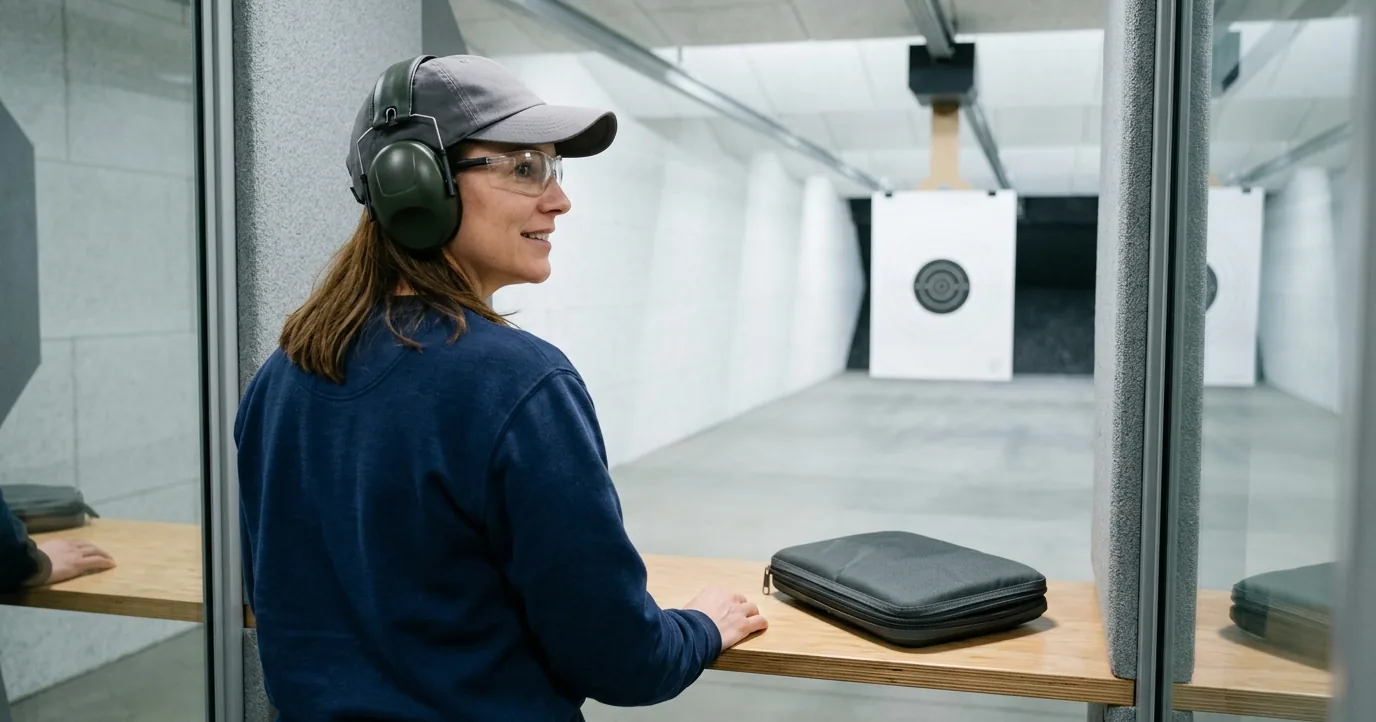
Almost everyone is nervous the first time they walk into a gun range. Gunfire thumps through the wall louder than you expected, and the people at the counter seem to share a vocabulary nobody taught you. Plenty of people buy a pistol, or even earn a carry permit, and then put off that first trip for months.
The nerves point at something real. A range has its own rules and its own language, and nobody expects you to know either on day one. The rules are short, every one of them exists to keep you safe, and once you know them a well-run range is one of the calmest places you will ever handle a gun. This guide covers choosing a range, what to bring, the commands you will hear, renting, the etiquette mistakes that mark a beginner, and what to practice once you are on the line.
Choosing the Right Range for a First Visit
Ranges come in two physical types and three kinds of operator, and the combination shapes the whole experience.
Indoor ranges are rows of booths, each with an electric carrier that runs your target out and back. They are climate controlled, open into the evening and usually staffed, with rentals and targets at the counter. The trade-offs are noise and air: gunfire is louder in a concrete room, and the next shooter is only a few feet away. Most indoor lanes are built around handgun distances, which suits a new pistol shooter well.
Outdoor ranges trade the roof for open air, longer distances and less concussion from your neighbors. They are at the mercy of the weather, and on many of them you walk downrange yourself to hang targets, so the whole line has to stop shooting first. A first outdoor trip in January also doubles as an honest test of the clothing and gloves in our winter carry guide.
Then there is the question of who runs the place:
- Commercial ranges are open to the public, usually sell lane time by the hour, and are the easiest places to rent a gun or book an instructor.
- Private clubs charge dues, often require a safety orientation before you get a gate key, and sometimes keep a waiting list. Many welcome beginners as a member’s guest.
- Public ranges are run by state wildlife agencies and similar bodies. Federal excise taxes on firearms and ammunition have helped build or maintain more than 800 public target ranges nationwide. They are often cheap or free, but some require a hunting license or a range permit, and some are unstaffed, so the shooters on the line make the safety calls themselves.
For a first visit, pick a staffed range with a range safety officer on duty, rental guns, and a quiet time slot such as a weekday morning. When you arrive, tell the counter you are new. Staff walk newcomers through rules and fees every day, and saying so gets you the orientation instead of the assumption that you already know how things work.
What to Bring, and What the Range Supplies
Most first-timers overpack gear and forget the basics. A short list covers it:
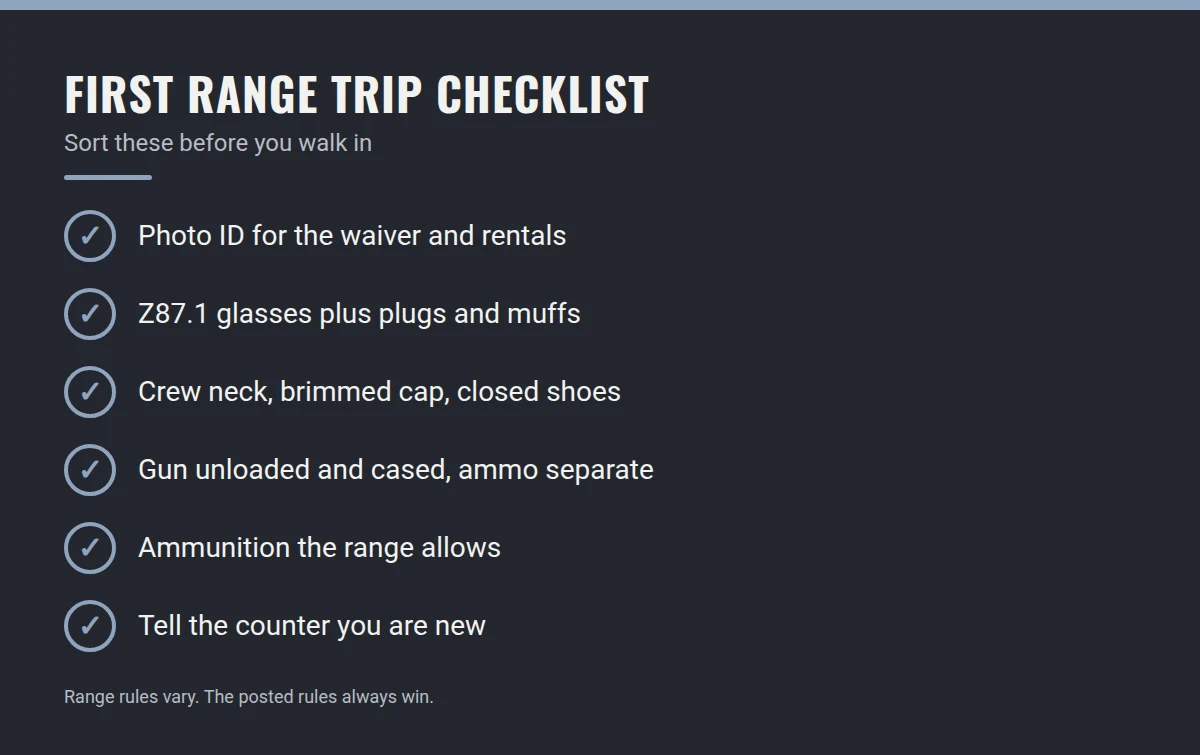
- Photo ID for the waiver and any rental.
- Eye and ear protection, covered below. Most ranges rent or sell basic sets.
- Clothing that keeps hot brass out: a crew neck or buttoned collar, a brimmed cap, and closed-toe shoes. Ejected cases are hot enough to sting, and a low neckline is exactly where they land.
- Your gun, unloaded and cased, with the magazines empty and the ammunition in its own box. Transport rules vary by state, so check yours before you drive; our guide to carrying a gun in your vehicle covers the main patterns.
- Ammunition the range allows. Many indoor ranges ban steel-core ammunition and some ban steel-cased rounds, so ask before buying a bulk case.
- A small notebook for distances, round counts and what you noticed.
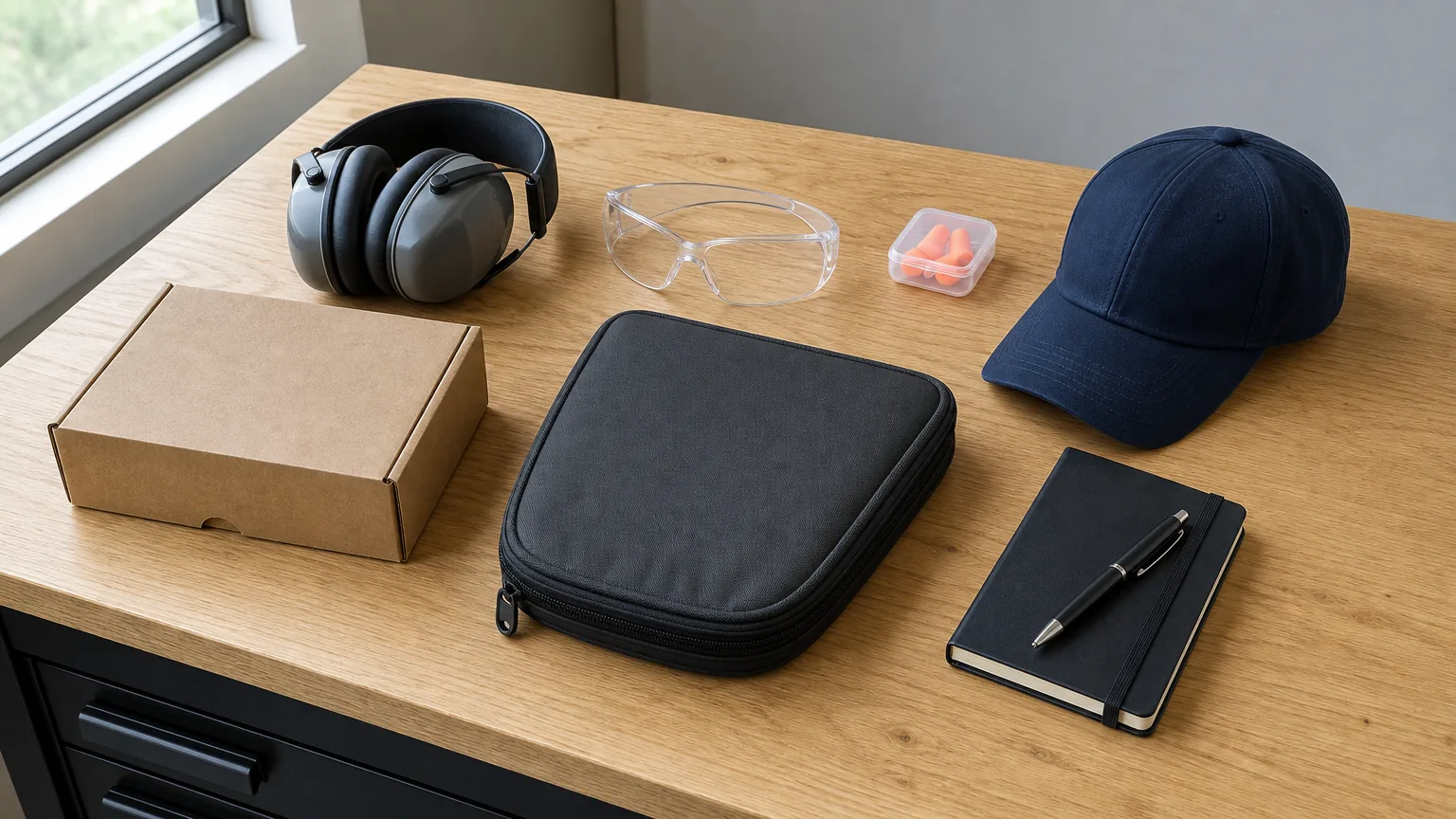
The range usually supplies targets, rental guns, ammunition (often mandatory with a rental), and loaner or rental eye and ear protection. What it cannot hand you over the counter is an understanding of how the firing line works.
Eye and Ear Protection That Actually Fits
Hearing damage from shooting is permanent, and it takes very little exposure. Peak sound levels from firearms run from roughly 140 to 175 decibels, with most recreational guns between 150 and 165. A single unprotected shot at those levels can do lasting harm, and hearing researchers point to the shooting environment, the distance between shooters and the fit of your protectors among the factors that move the risk.
Fit is where beginners lose most of their protection:
- Foam plugs are rated in the high 20s to low 30s for noise reduction, but only when rolled tight and pushed deep enough to expand inside the ear canal. A plug sitting half out does a fraction of its job.
- Earmuffs need an unbroken seal. Thick arms on safety glasses, a cap strap or hair under the cushion all open leaks, so choose glasses with thin, flat temples.
- Double up indoors. Plugs under muffs is the standard advice for enclosed ranges, especially beside a loud neighbor.
- Electronic muffs cut gunfire while passing normal sound through, so you can hear the range officer without lifting a cup off your ear, which is exactly when an unprotected shot catches people.
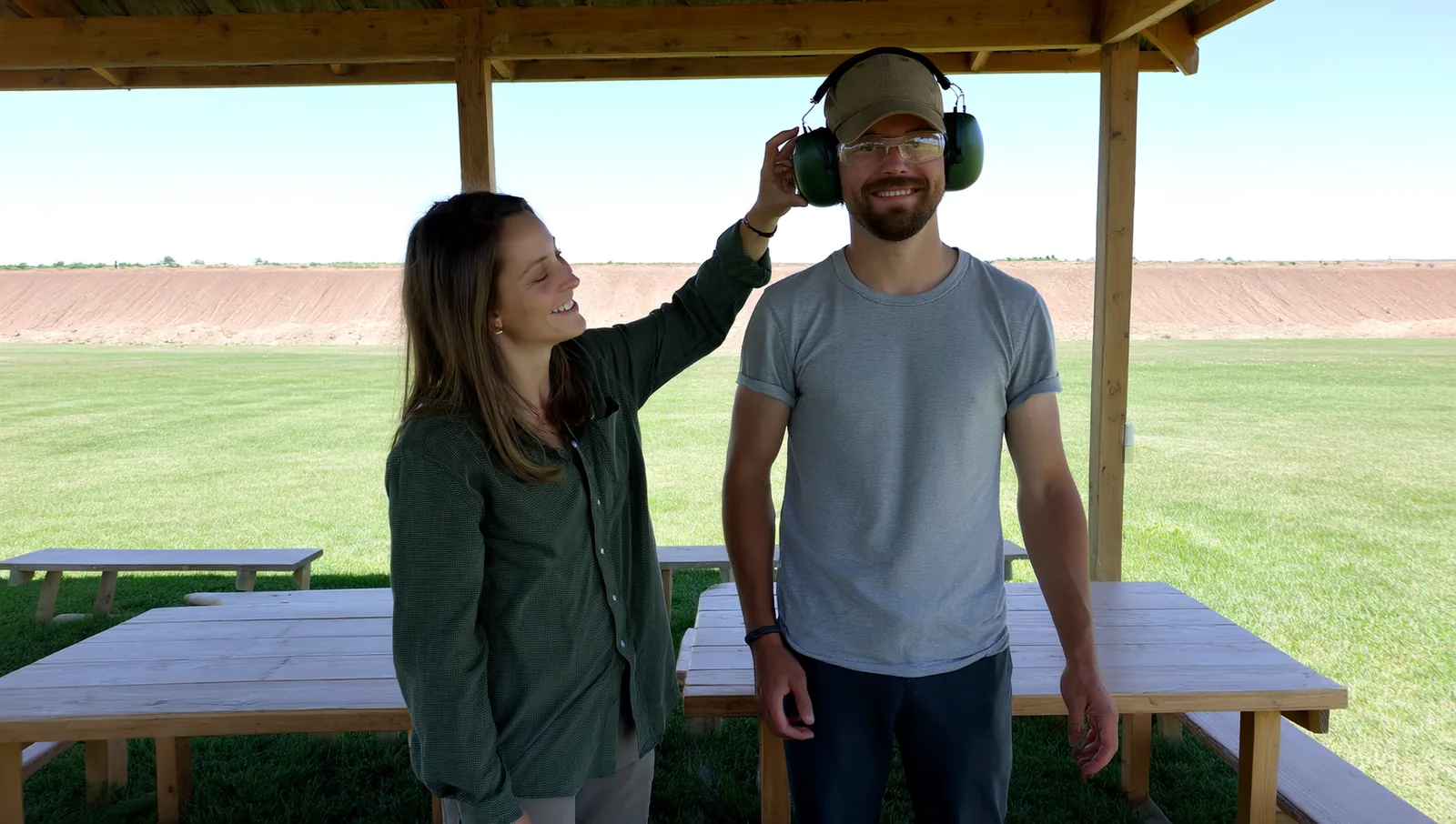
For your eyes, wear wraparound polycarbonate glasses certified to the ANSI Z87.1 impact standard, the certification ophthalmologists recommend. The Z87+ mark on the frame indicates the high impact rating. Ordinary sunglasses and everyday prescription lenses usually are not rated for this, so glasses wearers need safety glasses that fit over them or prescription safety lenses.
Range Commands, and What Cold and Hot Mean
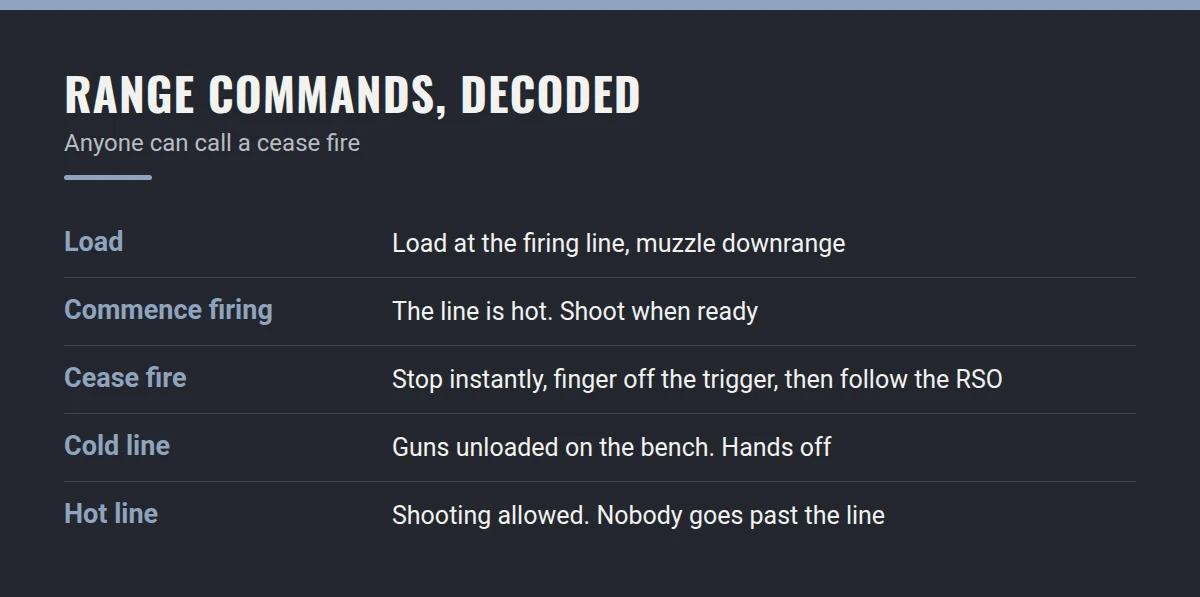
On a staffed range the range safety officer (RSO) runs the firing line, and their instructions are final. The core commands are few:
- “Load” or “load and make ready”: you may load your gun at the firing line, muzzle downrange. Not before.
- “Commence firing,” or “the line is hot”: shoot when you are ready.
- “Cease fire”: the most important command on any range. Stop immediately, even mid-press. Take your finger off the trigger, keep the muzzle downrange, and wait for the next instruction, which is usually to unload, open the action, set the gun on the bench and step back behind the line.
- “Unload and show clear,” common in classes: remove the magazine, lock the action open, and hold the gun pointed downrange so the officer can see an empty chamber.
Anyone can call a cease fire, including you. If you see a person downrange, a muzzle pointed the wrong way, or someone who looks hurt, shout it. A cease fire called over nothing costs everyone a minute; one that nobody calls can cost far more.
When the line is cold, nobody touches a firearm for any reason. Guns rest on the bench unloaded with actions open, shooters stand behind the safety line, and people walk downrange to change targets. When the line is hot, shooting is allowed and nobody goes forward of the firing line. On an unstaffed public range the shooters make these calls together, and nobody walks out until everyone has confirmed their gun is unloaded and set down.
The same two words carry a second meaning that trips up permit holders. A hot range, as a facility policy, welcomes loaded, holstered handguns anywhere on the property. A cold range requires every gun to stay unloaded, and often cased, until you reach the firing line. If you carry, call ahead and ask how the range wants a holstered carry gun handled. Whenever a range’s posted rules differ from this guide, the range’s rules win.
Getting Your Gun From the Car to the Line
The walk from the parking lot to your lane is where range rules are strictest, because it is where a gun passes closest to other people.
- Leave it cased until you reach your lane. Never open the case in the parking lot, the lobby or the walkway behind the firing line.
- Set the case on the bench with the muzzle end facing downrange before you open it, so the gun never points at a booth divider or the person behind you.
- Uncase it pointed downrange and leave it on the bench, action open, until the line is hot.
- Reverse the sequence to leave: unload, lock the action open, check the chamber, case the gun at the bench, and walk out with the case closed.
A lockable soft case is fine for most trips, because the habit matters more than the case: the gun is cased, on the bench pointed downrange, or in your hands at the firing line, and nowhere else.
Booking a Lane and Renting a Gun
Weekend afternoons and weekday evenings are busy at most commercial ranges, so reserve a lane if you can and ask whether new customers must watch a safety video or complete an orientation first.
At the counter, expect to show ID, sign a liability waiver and possibly sit through a short briefing. Renting is one of the smartest moves on a first trip, even if you already own a gun. Trying two or three pistols in one session teaches you more about grip, recoil and controls than any spec sheet, which makes it the natural first step in choosing your first concealed carry pistol.
A few rental realities:
- Most ranges require you to shoot ammunition bought from them in their rental guns.
- Some ranges will not rent a gun to someone who arrives alone, which is one more reason to bring a friend.
- The paperwork is light partly because the gun never leaves the building; federal rules call for a full background check when a dealer rents a gun out for use off the premises. None of that helps a person who is legally barred from possessing a firearm, because a rental in a lane is still possession.
Start small in recoil, not small in size. A tiny pocket pistol kicks harder than a full-size 9mm, and a .22 kicks least of all. A first-time shooter who wrote about an opening lesson for a Charlotte newspaper this summer felt the instructor’s 9mm demonstration through the chest and left with sore palms; the instructor’s fix was a .22, and the added control kept the lesson going. That is how good instructors build confidence, and a strong case for booking an hour with a certified instructor on your first visit.
Etiquette Mistakes That Mark a Beginner
Range etiquette is mostly safety in polite clothes. These are the mistakes range officers correct most often:
- Turning around with the gun in your hand. When someone behind you says your name, set the gun down pointed downrange first. Turning while holding it sweeps the muzzle across everyone in the room.
- Touching a gun while the line is cold, whether to wipe it down, check the sights or move it aside. Once guns are benched and people may be downrange, hands off until the line is hot again.
- Shooting anything except your own target. Your shots go into the target in line with your position, never into a neighbor’s lane, the carrier, the ceiling baffles, the floor or the dividers.
- The hot brass dance. A hot case down the collar makes anyone want to jump. Keep your finger straight, set the gun on the bench pointed downrange, and only then deal with the brass.
- Firing again after a shot that sounds wrong. If a round goes pop instead of bang, or the recoil feels weak, stop. A bullet may be lodged in the barrel, and firing another round behind it can wreck the gun and injure you. Keep the muzzle downrange and call the range officer. Our guide to handgun malfunctions explains how to tell a squib load from an ordinary stoppage.
- Coaching strangers or handling their guns. Offer help only when asked, and never touch someone else’s firearm without permission.
- Eating, drinking or smoking on the line, or leaving a mess behind. Take your targets, sweep your brass if the range asks, and leave the booth as clean as you found it.
Lead: The Hazard Nobody Mentions at the Counter
Every shot releases lead dust and fumes from both the primer and the bullet. A 2017 review of 36 studies found elevated blood lead levels among shooters at firing ranges, linked to airborne lead, the number of rounds fired and the caliber of the gun, and it singled out women and children who shoot recreationally as groups at special risk. Good ventilation at a well-run indoor range cuts the exposure, but your own habits decide how much you carry home:
- No eating, drinking or smoking on the firing line.
- Wash your hands and face with soap and water before you eat, drink or pick up your phone.
- Change clothes after a session and wash range clothes separately.
- Gather brass with the range broom rather than bare hands, and keep range shoes and bags away from where young children play.
Lead-free primers and bullets reduce exposure further, though they cost more.
A First-Session Practice Plan
The classic first trip goes like this: clip a full-size silhouette to the carrier, send it as far back as it goes, and empty magazines as fast as possible. It is loud and satisfying and teaches almost nothing. A better first hour uses 50 to 100 rounds:
- Start close, at three to five yards. Early success at short range settles nerves and lets you see what your hands are doing.
- Use a small, plain aiming point. A blank sheet with a circle about the size of a coaster, or a paper plate, shows exactly where each shot went relative to where you aimed, which a silhouette hides.
- Load one or two rounds at a time for the first few strings. Fire slowly, focus on a crisp front sight and a smooth press straight to the rear, and hold the trigger back for a moment after each shot.
- Shoot five-shot groups. When five shots land in a group about the size of your fist, move the target back a couple of yards. If the group spreads, bring it closer again.
- Run a ball and dummy check. Have your companion hide an inert dummy round somewhere in a magazine. When the gun clicks instead of firing, watch whether the muzzle dips. That dip is a flinch, and a common reason new shooters hit low. Ask the range first whether dummy rounds are allowed.
- Stop before you get tired, and finish with one good group up close. Ending on a success matters more than hitting a round count.
- Write it down: the gun, the distance, the round count, the group size, and one thing to work on next time.
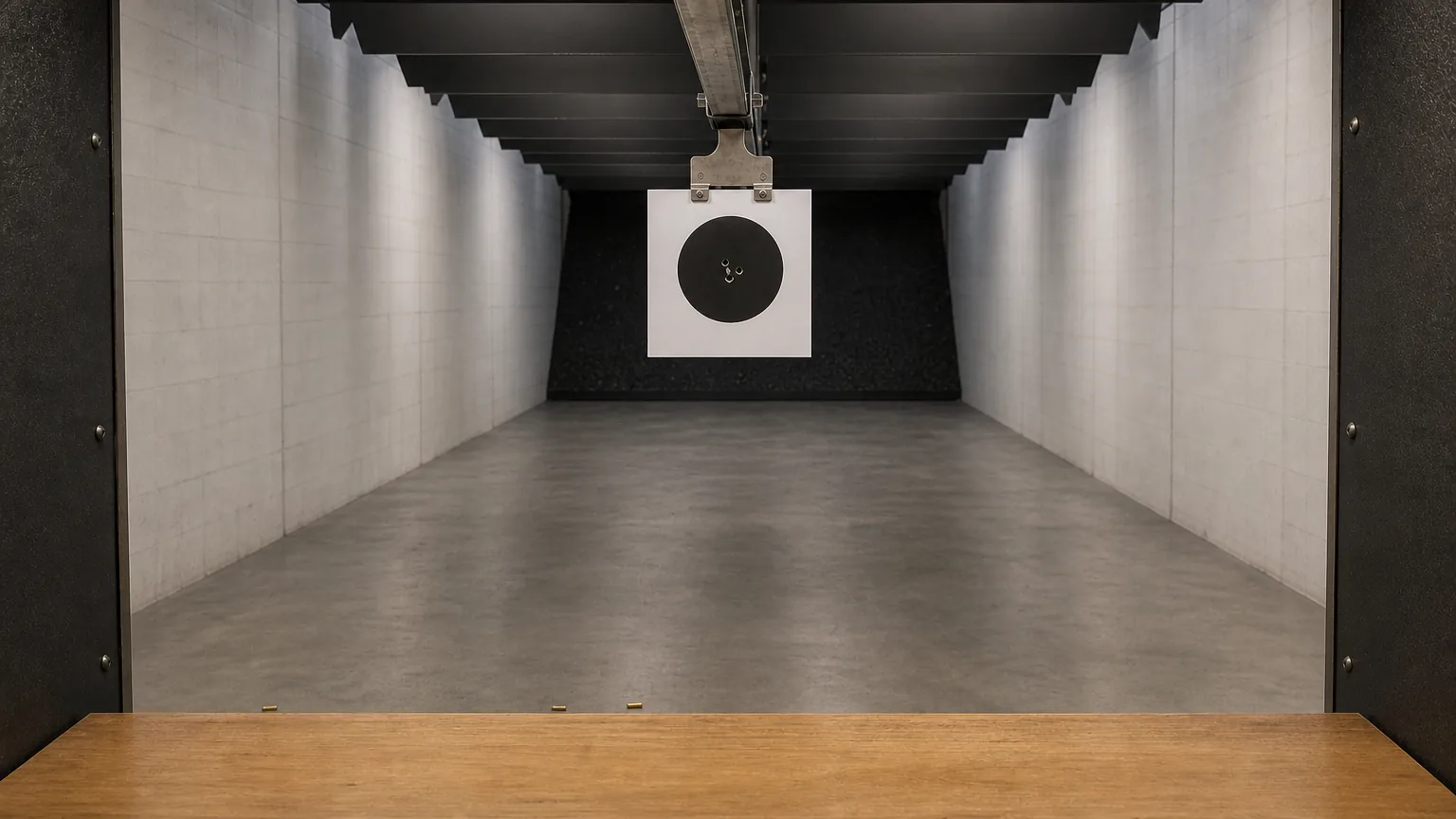
Leave two things for later: drawing from a holster, which many indoor ranges prohibit unless you have passed their holster qualification or are in a class, and rapid fire, which many ranges limit.
After the First Trip
Go back within two weeks while the routine is still fresh. The second trip is where the nerves fade and the real learning starts, and an in-person class with a certified instructor will compress months of trial and error into an afternoon. When you want structure beyond those first visits, our 12 month training roadmap lays out how dry fire, live fire benchmarks and advanced courses fit together.
Further reading (sources)
- Let’s Go Shooting on what to ask range staff on your first visit
- U.S. Fish and Wildlife Service for the public target ranges built with excise tax dollars
- Florida Fish and Wildlife Conservation Commission with the safety rules posted at its public shooting ranges
- NRA Family on the basic range commands and who may call a cease fire
- NRA Women explaining the two different meanings of hot and cold ranges
- Meinke and colleagues on how loud recreational firearms are and what drives shooters’ hearing loss
- Handguns for doubling up plugs and muffs at indoor ranges
- EyeWiki with firearm eye injuries and the eyewear standard eye doctors recommend
- Laidlaw and colleagues on blood lead levels in shooters across 36 studies
- Legal Information Institute for the federal rule on lending and renting firearms
- The Charlotte Post about a nervous first-timer’s opening handgun lesson