The Complete Concealed Carry Holster Guide: Carry Positions, Materials, and Retention
Published on June 2, 2026
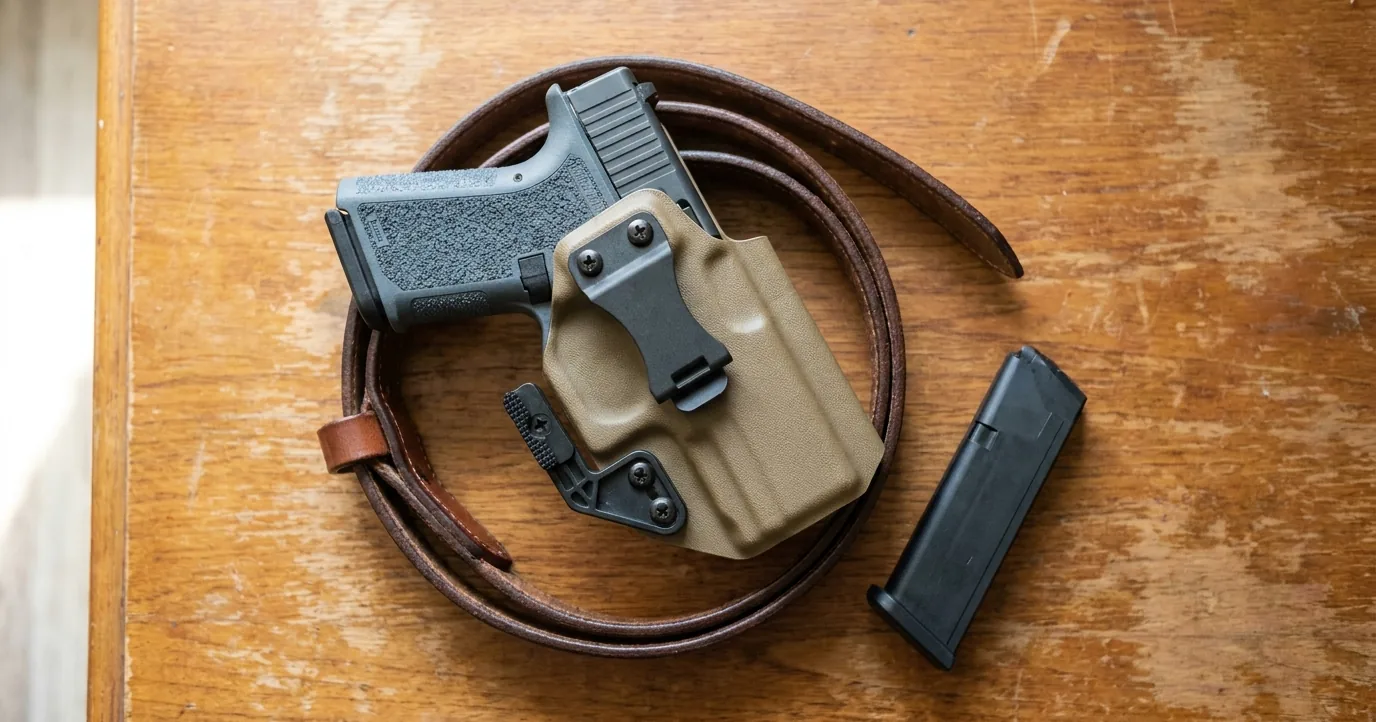
The holster is the most overlooked piece of carry gear and the most important after the gun itself. A good one keeps your pistol secure, covers the trigger completely, and rides comfortably enough that you actually wear it every day. A bad one is a genuine hazard: it can let the gun shift, expose the trigger, or hurt so much that you leave the pistol at home. People agonize for weeks over which handgun to buy, then grab the first soft nylon pouch off the rack. That is backwards. This guide covers every viable holster type and carry position, the materials they are built from, how retention and fit actually work, and the safety habits that keep it all from going wrong.
Two ideas to hold onto before the details. First, the holster, the gun, and the belt are one system. A great holster on a floppy department-store belt sags and prints, so budget for a real gun belt too. Second, the “best” holster is the one you will carry comfortably and draw from the same way every single time. Comfort is not a luxury here. It is what makes carry consistent, and consistency is what makes carry safe.
A Holster Is Safety Equipment First
Before any talk of carry positions, be clear on what every holster must do. It has to cover the trigger guard completely, so nothing (a jacket drawstring, a fingertip, the edge of a cover garment) can reach the trigger while the gun is holstered. It has to hold the pistol securely through ordinary movement: walking, sitting, bending, climbing stairs. And it has to stay anchored to your belt or body so the whole rig does not migrate over the day.
That rules out the cheap, soft, one-size-fits-all pouches sold near the register. The red flags of a bad holster are easy to spot once you know them: soft sides that collapse after the draw, so the mouth no longer holds open for reholstering; a sloppy fit that lets the gun rattle or work loose; partial trigger coverage; and flimsy clips that lift off the belt when you draw. A proper holster is molded or built rigidly to one specific gun model, covers the trigger guard fully, and clips or mounts to the belt so securely that you can draw one-handed without the holster following the gun out. If a holster fails any of those tests, it is not a bargain. It is a liability.
The Carry Positions, Clock by Clock
Carry positions are described by a clock face, with twelve at your belt buckle and the numbers running around your waist toward your strong-side hip. Inside the waistband (IWB) means the holster rides between your body and your trousers. Outside the waistband (OWB) means it sits on the belt outside the pants.
Appendix inside the waistband, or AIWB, places the holster around the one o’clock position, just right of the buckle for a right-handed carrier. It has become the dominant concealed-carry method for good reason: it hides a surprisingly large pistol under an untucked shirt, keeps the gun in front of your hands where it is hard to grab from behind, and yields a fast, consistent draw. The trade-offs are real. The muzzle points toward your body as you reholster, which makes slow, deliberate reholstering non-negotiable, and the position can dig in when you sit unless the holster is set up well.
Strong-side IWB sits farther back, around three to four o’clock on your dominant hip. It is the classic, forgiving carry position: comfortable for most body types, easy to conceal under an untucked shirt, and gentle on beginners because the muzzle never covers your own torso. The draw is a hair slower than appendix, and the grip can print when you bend forward, but for many carriers this is the place to start.
OWB carry rides on the belt outside the trousers, usually around three to five o’clock. With a proper cant and a covering garment, a pancake-style OWB holster conceals better than people expect and is the most comfortable way to carry a full-size pistol all day. It is the easiest rig to draw from and the hardest to hide in hot weather, which is why it suits cooler climates and range work.

Pocket, Ankle, Shoulder, and Belly Band
The remaining positions solve specific problems. Pocket carry suits the smallest pistols, the pocket .380s and tiny revolvers, but only inside a dedicated pocket holster that breaks up the gun’s outline and, above all, covers the trigger. Never drop a pistol loose into a pocket. Ankle carry hides a small gun well and works when a waistband is not an option, such as seated driving or business-formal dress, at the cost of a slow draw that asks you to bend or kneel. Shoulder holsters spread a heavier gun’s weight across the back and shoulders and shine under a jacket, though they take practice to draw safely and can sweep bystanders if handled carelessly. The belly band, an elastic wrap worn against the skin, gives the most wardrobe flexibility (gym shorts, athletic wear, a tucked dress shirt) but trades away the rigid trigger protection of a molded holster, so choose one with a hard trigger-guard shield rather than bare elastic.
Kydex, Leather, or Hybrid?
Holster material shapes how a rig draws, conceals, and ages. Kydex is a rigid thermoplastic molded to one gun model. It is durable, water resistant, and holds its shape so the mouth stays open for one-handed reholstering, and it gives a crisp, audible click of passive retention as the gun seats. The downside is that a hard shell against your body can feel less forgiving until you tune the fit. Leather is the traditional choice: comfortable against the skin, it conforms to your body over time and looks classic, but it can soften and collapse at the mouth with age, holds moisture, and wears faster. Hybrid holsters pair a molded kydex shell with a broad leather or neoprene backing against the body, chasing kydex retention with leather-like comfort, though the larger backer adds bulk and can curl over years of use. For a first IWB or appendix rig, a quality kydex or hybrid holster is the easiest to live with.
Retention Levels, Cant, and Ride Height
Retention is how firmly the holster grips the gun. For concealed carry, passive retention (friction from a precisely molded shell, often adjustable with a tension screw) is the standard and is plenty, because your cover garment hides the gun and no one is reaching for it. Active retention, the numbered levels you see on duty gear (Level II, Level III) that add a thumb release or hood, belongs on openly carried holsters where the gun is exposed to a grab. A concealed carrier rarely needs more, but the test is simple: load the holster, turn it upside down, give it a firm shake, and the gun should stay put.
Two fit adjustments matter just as much. Cant is the angle at which the gun sits. A slight forward cant, often around fifteen degrees, on strong-side and OWB rigs tucks the grip down and back so it conceals better and draws cleanly, while AIWB usually runs closer to straight up and down. Ride height is how high or low the holster carries the gun on the belt. A higher ride buries the muzzle and grip but can be slower to grasp; a lower ride speeds the draw but risks exposing the gun. Many quality holsters let you tune both, and small changes make a large difference in comfort and concealment.
Claw, Wing, and Wedge: The Tuning Hardware
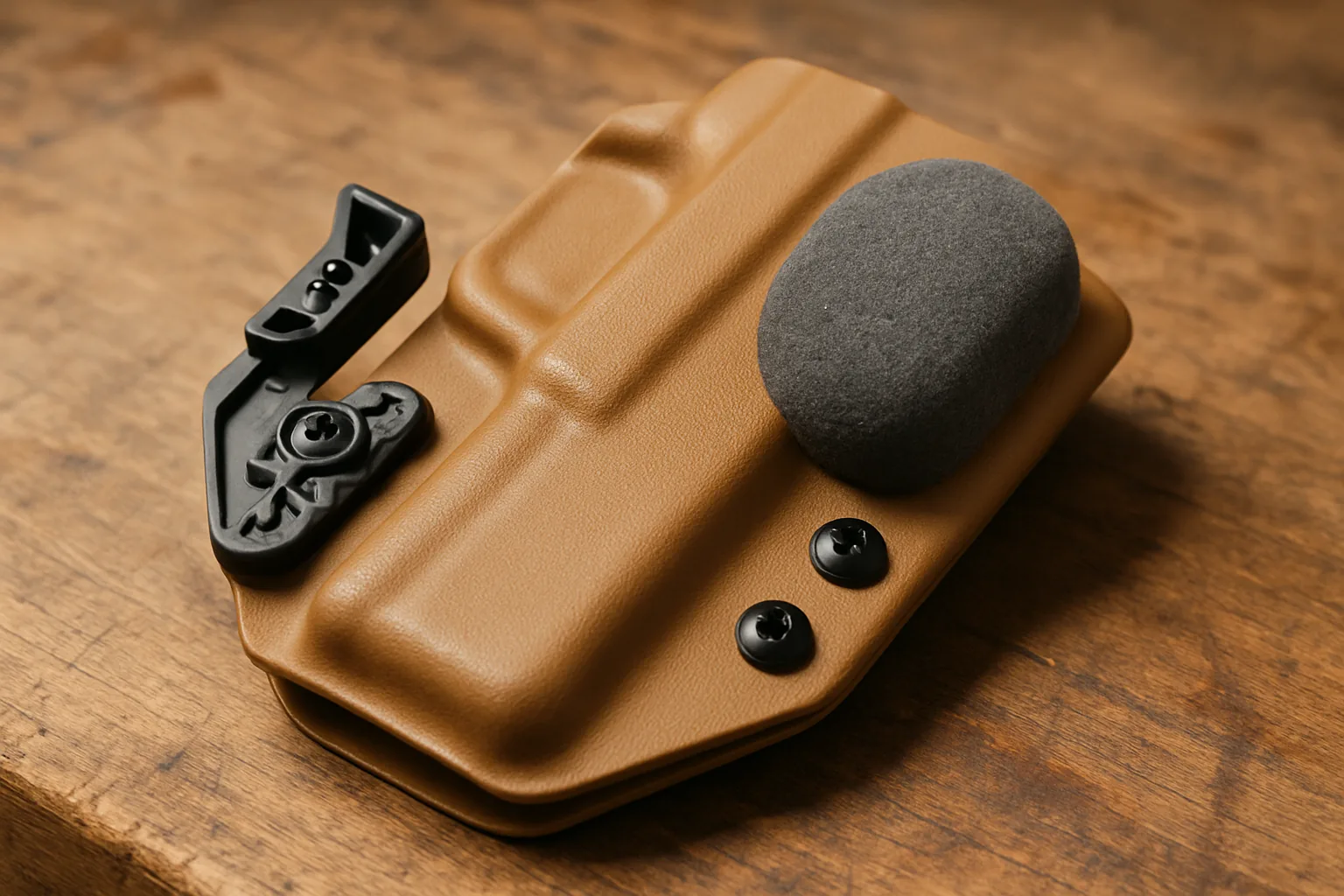
Modern appendix holsters live or die by their attachments. A claw or wing is a small lever at the front of the holster that pushes against your belt and rotates the grip inward, toward your body, defeating the printing that gives a gun away under a shirt. A wedge is a foam or rubber pad behind the muzzle that tilts the grip in and spreads pressure so the rig stays comfortable when you sit. Together, a claw and wedge turn a printing, jabbing appendix setup into one that disappears under a t-shirt. If you carry AIWB, treat these as part of the holster, not optional extras.
Match the Holster to Your Body, Your Clothes, and Your Gun
There is no universal best holster, only the best one for your body, your wardrobe, and your pistol. Slim, athletic builds often conceal appendix easily; longer or fuller midsections sometimes carry more comfortably at three or four o’clock. How you dress decides as much as anything: an untucked shirt opens up IWB and appendix, a jacket makes OWB or a shoulder rig practical, and a tucked-shirt dress code may push you toward a tuckable IWB clip, a pocket gun, or an ankle rig. And the holster has to be molded to your exact pistol, including any optic or weapon light. A popular model like a Glock 19 or SIG P365 has dozens of holster options; an obscure gun may have almost none, one more reason, as our guide to choosing your first concealed carry pistol covers, to buy a well-supported model.
Reholster Like It Can Hurt You
Most negligent discharges tied to carry happen not on the draw but on the way back in, when a finger, a shirttail, or a drawstring slips into the trigger guard as the gun is pushed into a collapsing holster. Keep your trigger finger straight and high on the frame any time the gun is out of the holster. Reholster slowly, and look the gun back into the holster rather than holstering by feel, especially with appendix carry where the muzzle sits near your body. Clear your cover garment fully out of the way first so nothing can foul the trigger. A rigid holster that keeps its mouth open makes every part of this safer, one more argument for kydex. Practice your drawstroke and your reholster unloaded, after triple-checking the gun is empty, until both are smooth and unremarkable. A live-fire class is the place to groom these habits under a coach’s eye, and our guide to what to expect in your first concealed carry course covers what that training looks like.
Before You Carry
A holster is not an afterthought to the pistol. It is the safety equipment that makes carrying that pistol responsible. Buy a rigid holster molded to your gun, mount it on a real belt, choose the carry position that fits your body and the way you dress, and tune cant and ride height until the rig is comfortable enough to wear all day. Then practice the draw and the reholster until they are automatic, and remember that how you carry also carries legal weight: accidentally exposing a concealed gun can become a brandishing question in some states, which we unpack in our use-of-force legal primer, and concealment rules themselves vary, as our overview of concealed carry permits and state laws explains. Get the holster right and everything else about carrying gets easier.
Further reading (sources)
- PHLster Holsters on setting up an appendix rig with a claw and wedge so it stops printing
- Safariland for a clear breakdown of every concealed carry holster position
- Falco Holsters with a head-to-head comparison of leather, kydex, and hybrid builds
- Vedder Holsters on the safety, clothing, and reholstering side of appendix carry
- Top Firearm Reviews via an NRA instructor on matching pocket pistols to a proper pocket holster