Connecticut's Convertible Pistol Ban: Targeting the Gun's Design, Not Just the Switch
Published on June 29, 2026

On June 5, 2026, Governor Ned Lamont signed Connecticut Public Act 26-41 into law, and with it the state did something no federal statute has tried. Rather than banning the small conversion device that turns a pistol into a machine gun, or naming specific handgun models on a prohibited roster, Connecticut wrote its ban around the gun’s internal design. The new law, which started as House Bill 5043 and cleared the Senate in a contentious overnight vote on the last day of the session, targets the mechanical trait that makes conversion easy in the first place. That is a meaningful shift, and because the design it describes sits inside many of the most popular concealed carry pistols in America, carriers far outside New England should understand what it actually says. As always, this is general information rather than legal advice, and Connecticut law is enforced aggressively enough that any specific question belongs with a Connecticut firearms attorney.
What Public Act 26-41 Actually Bans
The law makes it a Class D felony, punishable by up to five years in prison, to sell, import, distribute, or advertise a “convertible pistol” in Connecticut. The effective date is October 1, 2026.
The definition is the novel part. A convertible pistol is a semiautomatic pistol built with a cruciform trigger bar that can be readily converted to fire automatically by attaching a conversion device. The cruciform trigger bar is the cross-shaped trigger component used in Glock-pattern striker-fired pistols, and it is precisely the part a “Glock switch” works against. That switch, sometimes called an auto sear, is a small backplate that replaces the slide cover plate at the rear of the slide and lets the pistol fire in full automatic. Connecticut’s drafters reasoned that if the host pistol’s geometry is what makes the switch trivial to install, then the host pistol’s geometry is what the state will regulate.
The statute carves out hammer-fired pistols and striker-fired designs with a shielded trigger bar, the idea being that those designs resist the conversion the law is worried about. Active and retired law enforcement are also exempt. In practice the design test most squarely captures Glock pistols and the growing field of Glock-pattern clones such as the Palmetto State Armory Dagger, Shadow Systems models, and the Ruger RXM. Whether other striker-fired guns from makers like SIG Sauer or Smith and Wesson fall inside the definition depends on the specific architecture of their trigger groups, which is exactly the kind of line-drawing question that tends to get sorted out in court rather than in a blog post.
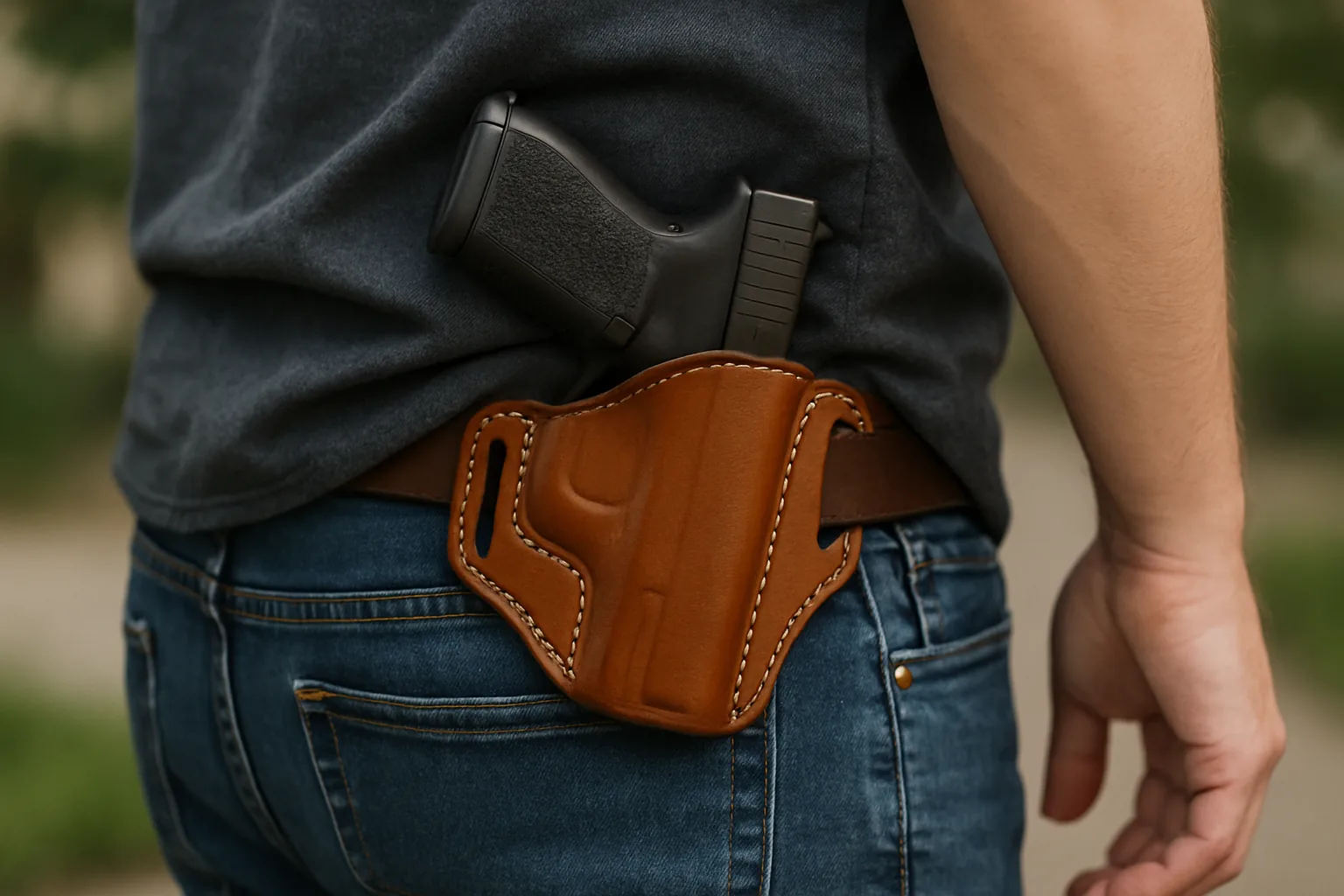
Design, Not Device: How This Differs From Federal Law
To see why Connecticut’s approach is unusual, it helps to line it up against the federal rule. Under the National Firearms Act, the conversion device itself is the contraband. A Glock switch is legally a machine gun the moment it exists, and possessing one without proper registration is a federal felony carrying up to ten years in prison and fines reaching a quarter million dollars. Federal law does not care what pistol you bolt it onto. It regulates the part that does the converting.
Connecticut inverts that logic. The switch was already illegal in Connecticut and everywhere else, so the state went after the thing that is still perfectly legal: the ordinary, unmodified pistol whose design happens to accept the switch. One framework bans a small machined part. The other bans a category of complete, functional handguns based on a feature they share. Supporters argue this is the only way to get ahead of a problem that 3D printing has made cheap and widespread. Critics counter that it punishes lawful owners for a crime committed with a separate, already-banned object.
This is also a reminder that the federal layer never goes away. Even where a handgun is perfectly legal to own, federal statutes can turn an otherwise law-abiding person into a felon in ways that surprise people, from the machine gun rules here to the federal “unlawful user” gun ban that trips up cardholders and prescription patients. For the full federal picture, our federal firearms law reference for concealed carriers lays out how the National Firearms Act, prohibited-person rules, and interstate transport law fit together.
What the Law Does Not Do
It is easy to read “Glock ban” in a headline and picture confiscation. That is not what this law does, and the distinction matters enormously.
Public Act 26-41 does not criminalize possession. If you lawfully owned a covered pistol before October 1, 2026, you keep it. There is no surrender requirement, no registration scheme, and no buyback. What the law shuts off is the future supply: dealers in Connecticut cannot sell, import, or advertise new convertible pistols once the ban takes effect. It is a sales prohibition aimed at the front of the pipeline, not a possession crime aimed at current owners.

That structure is common in firearm legislation, and keeping it straight is the difference between understanding a law and panicking about it. The same care applies any time you compare jurisdictions, because the rules genuinely change at every border, a theme that runs through our guide to concealed carry state laws and training requirements.
What It Means for Connecticut Carriers
For a Connecticut resident who already carries a Glock or a similar striker-fired pistol, the immediate practical effect is narrow. Your existing gun remains legal to own and to carry under your permit, exactly as before. What changes is the marketplace. Starting October 1, the new and used inventory of these pistols dries up inside the state, so replacing a worn gun, buying a backup, or arming a family member means either choosing a model that falls outside the design definition or shopping through a lawful out-of-state pathway with all the federal transfer rules that entails.
Because so many standard carry guns ride on the Glock-pattern platform, the law quietly reshapes the local options. Shooters who want to stay clear of the definition will lean toward hammer-fired designs and striker-fired pistols built with shielded or non-cruciform trigger groups. If you are reworking your carry setup around the new reality, our roundup of the best concealed carry handguns of 2026 walks through the size classes and action types worth considering.
Driving Through Connecticut With a Glock
This is where out-of-state carriers need to pay attention, because Connecticut is one of the least forgiving states in the country for a visitor with a handgun. Connecticut does not honor any other state’s carry permit. None. A non-resident cannot lawfully carry a loaded, concealed pistol in Connecticut on the strength of a permit from home, and that was true long before this bill.

The good news is that Public Act 26-41 is a sale and import ban, not a possession or transport ban, so it does not turn your lawfully owned out-of-state Glock into contraband when you pass through. The mechanism that protects that drive is federal. Under the Firearm Owners Protection Act, you may transport a firearm through a state where you could not otherwise possess it, provided you are traveling between two places where possession is legal for you, the gun is unloaded, and both the firearm and ammunition are locked in a container that is not the glove box or center console, ideally the trunk. Connecticut is notorious for testing the edges of that protection, so strict compliance is not optional. The word “import” in the new statute is aimed at commercial supply rather than a traveler transiting with a personal firearm, but given how the state enforces its gun laws, anyone planning to carry, store, or even pass through with a covered pistol should confirm their exact situation with a Connecticut firearms attorney before the trip. For the wider interstate picture, see our concealed carry travel atlas, and treat reciprocity as something to verify every single time rather than assume.
The Litigation Ahead
None of this is settled. On May 28, 2026, before the ink was even dry, the National Shooting Sports Foundation, the firearm industry’s trade association, announced it would challenge Public Act 26-41 in court. Its core argument leans on the Supreme Court’s Second Amendment framework: the pistols swept up by the design test are among the most common handguns in the nation, and arms in common use for lawful purposes are exactly what the Heller and Bruen decisions protect. Connecticut is not alone in facing this fight. California’s comparable Glock-style restriction has already drawn an NRA lawsuit, and several other states moved on similar bills during the same legislative season, which means the design-based approach is likely to be tested in more than one federal circuit.
For now, the practical reality is simple. A challenged law is still the law until a court says otherwise. Public Act 26-41 takes effect October 1, 2026, regardless of the pending litigation, unless a judge issues an injunction first.
The Bottom Line
Connecticut has opened a new chapter in firearm regulation by writing its ban around how a pistol is engineered rather than around a banned part or a named model. If you live in or travel through the state, the takeaways are concrete. Your existing pistol is grandfathered, new sales of covered guns stop on October 1, Connecticut still recognizes no outside permit, and the federal transport rules are what keep an out-of-state carrier legal on the highway. Watch the court docket, because the design-based model could spread or could be struck down, and verify your own situation with a qualified Connecticut attorney before you buy, carry, or cross the line. A ban written around a blueprint is a genuinely different animal, and it deserves a careful read rather than a headline.
Further reading (sources)
- NBC Connecticut on the Senate’s overnight approval of the convertible pistols bill
- WSHU for how the bill bans the future sale of easily modified pistols
- Fox News with the gun-rights pushback on the cruciform trigger bar definition
- USA Carry reporting Governor Lamont’s signing and the NSSF’s promised court challenge
- Concealed Carry Inc on the wave of state convertible-pistol bans and how their definitions compare