The Concealed Carrier's State Travel Atlas: Reciprocity, Permitless Carry, and Crossing State Lines in 2026
Published on June 19, 2026

Your concealed carry permit is a state document doing an interstate job. The pistol on your hip is legal in your driveway and can become a felony three hours up the highway, in a state that never agreed to recognize the license in your wallet. For a road trip, a holiday visit, or a cross-country move, the real question is not “am I a permit holder” but “does the state I am driving into treat me as one.” This atlas lays out how carry rights move across state lines in 2026: the three legal worlds, how reciprocity actually works, the federal transport protection that is thinner than most people think, and the states where your permit means nothing at all.
Three legal worlds, not fifty
As of mid-2026, roughly 29 states allow some form of permitless carry (often called constitutional carry), meaning a resident who can legally own a firearm may carry it concealed without a state license. West Virginia is among the most recent to widen its rule, and bills to join the roster keep surfacing in states like Wisconsin. A second group still requires a permit but issues one to any applicant who clears the background check and training, the shall-issue model that covers most of the country. The third group technically issues permits to qualified applicants but layers on long sensitive-place lists, heavy training hours, and slow processing that make everyday carry difficult in practice.
The catch for travelers is that permitless carry protects people inside that state, and many permitless states extend it to any law-abiding nonresident who is lawfully carrying. It does not extend your home permit’s reach. The moment you cross into a permit-required state, the only thing that matters is whether that state recognizes your license.
How reciprocity actually works
Reciprocity is the agreement, by statute or executive order, that State B will honor a carry permit issued by State A. It is not symmetric, not universal, and not automatic. Some states recognize every valid out-of-state permit. Others recognize only permits from states whose standards they judge comparable, usually weighing minimum age, live-fire requirements, and database checks. A few recognize nothing at all.
Two practical points matter most. First, recognition attaches to the permit, not to you, so the rules of the state you are standing in govern everything: its no-carry zones, magazine limits, and duty-to-inform requirements. Second, a nonresident permit can stretch your coverage. Carriers who travel a regular route often add a nonresident permit from a widely recognized state to close the gaps. Map every state on your itinerary before you leave, not just your origin and destination. For the foundation beneath all of this, see our guide to concealed carry permits, state laws, and training requirements.

The hard-no states
Six states anchor the “your permit is not honored here” list: California, New York, New Jersey, Illinois, Hawaii, and Massachusetts. They recognize no out-of-state concealed carry permits whatsoever. The District of Columbia, Maryland, and Rhode Island belong in the same mental bucket for a visitor. In these places a permit from elsewhere has no legal effect, and carrying on it can be a serious felony no matter how clean your record is back home.
These are also the jurisdictions with the longest sensitive-place lists, where even lawful residents cannot carry on transit systems, in parks, in government buildings, in bars, or on posted private property. Hawaii shows how fast the picture moves: handgun registrations there recently hit a record high and permit applications jumped about 15 percent in a year, yet the state still recognizes no outside permit. If your route runs through any of these, the safe plan is to secure the firearm for transport and not carry, which is where federal law becomes the only thing on your side.
FOPA: the federal floor for transport
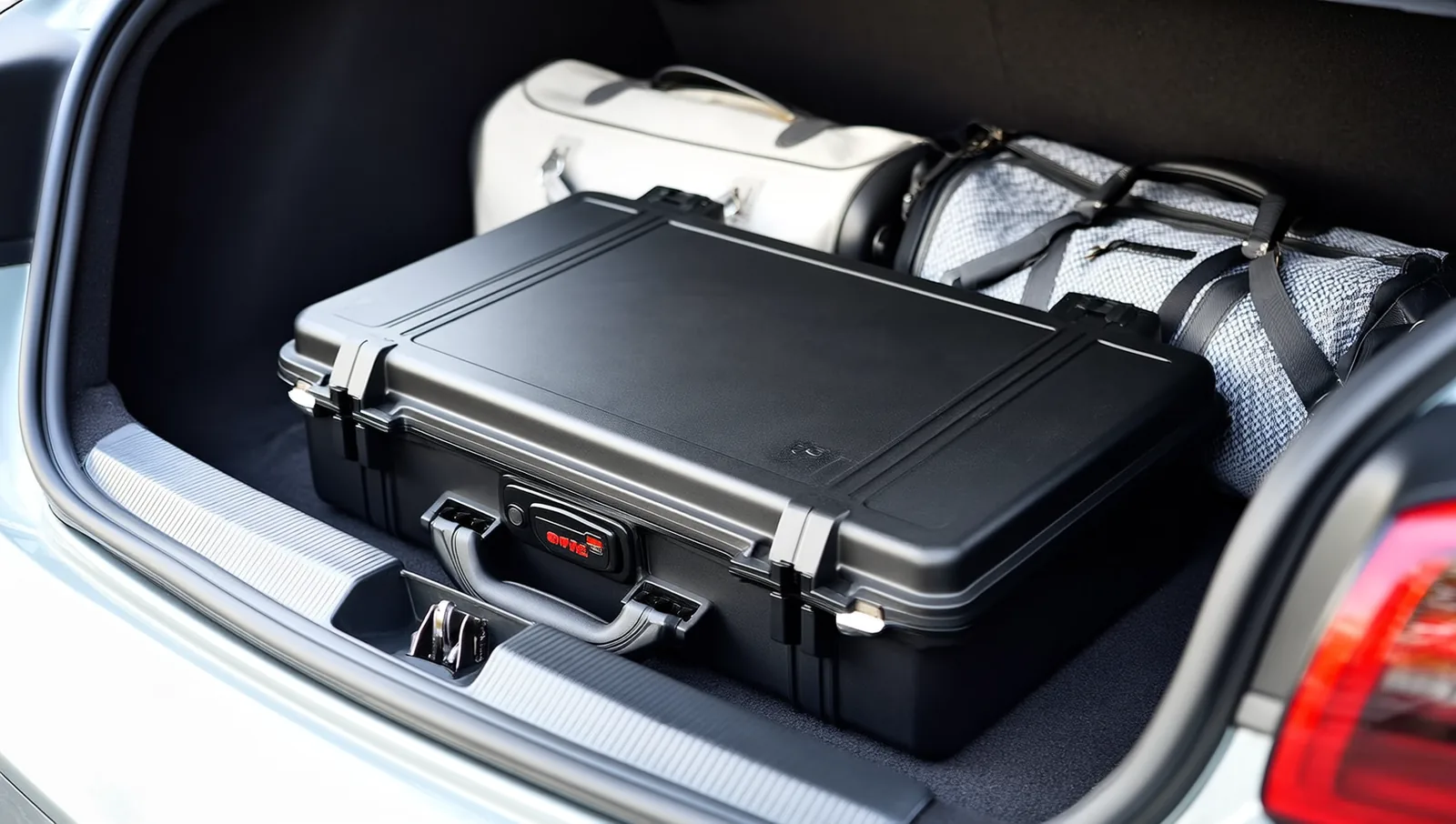
The Firearm Owners Protection Act of 1986, codified at 18 U.S.C. 926A, gives you a narrow safe-passage right. If you may legally possess and carry the firearm at your origin and at your destination, you may transport it between them through a state that would otherwise forbid it, provided the firearm is unloaded and neither it nor the ammunition is readily accessible from the passenger compartment. In a car with a trunk, that means the trunk. In an SUV or pickup without one, it means a locked container that is not the glove box or the center console.
FOPA protects the act of transport, not the stops along the way. The protection weakens the moment you deviate. An overnight hotel stay, a long detour, or a roadside meal that puts the gun back within reach can take you outside the statute. Some strict states also read it narrowly, so travelers have been arrested at airports and traffic stops and forced to raise FOPA as a courtroom defense rather than a roadside shield. Treat it as a floor, not a guarantee. Our federal firearms law reference covers 926A and the Gun-Free School Zones Act in more depth.
Vehicle transport changes at every line
Even between two carry-friendly states, the in-car rules differ. Some let a permit holder carry loaded on the body or in the console. Others require the firearm unloaded and cased if you lack that state’s own permit. Whether the gun can be loaded, whether it can ride in the glove box, and whether it can sit in a door pocket are all decided state by state.
Duty to inform is the trap that catches careful carriers. In some states you must volunteer to an officer that you are armed, while in others you answer only if asked. Nebraska, which adopted permitless carry in 2023, still requires you to tell law enforcement, and Omaha police rewrote their traffic-stop training in late 2025 after repeated confusion over that exact point led to arrests. Permitless does not mean rule-free, a lesson we draw out in our North Carolina SB50 analysis.
What changed for 2026
The atlas is redrawn every legislative session. A few 2026 developments are worth checking before you travel:
- Delaware’s permit-to-purchase handgun law is now in effect, adding a permit step before a handgun sale, with limited exemptions for certain buyers.
- Colorado’s House Bill 24-1174 now requires eight hours of in-person instruction from a verified instructor for a new permit, which raises the bar for residents and shapes the reciprocity other states extend to them.
- Hawaii’s permit applications surged roughly 15 percent even as the state continues to recognize no outside permit.
- North Carolina’s SB50, which would drop the permit requirement and lower the carry age to 18, remains in an override fight after the governor’s veto. Until that resolves, the current permit and training rules stand.
A pre-trip checklist
Before any armed trip, do four things. Confirm reciprocity for every state on the route, not just the endpoints. Read the no-carry zones for your destination. Learn that state’s duty-to-inform and vehicle-transport rules. And have a transport plan for any hard-no state you pass through. If a deadly-force situation ever arises far from home, the local standard governs, so it is worth reviewing our use-of-force legal primer before you go.
The patchwork is the price of a fifty-state system, and it shifts constantly. Verify against an up-to-date source such as handgunlaw.us or the destination state’s attorney general before you cross a line, carry on the most restrictive rule that applies to any leg of your trip, and when a route is genuinely unclear, ask a firearms attorney licensed in that state rather than guessing.
Further reading (sources)
- Handgunlaw.us for state-by-state reciprocity maps and interstate travel rules
- Everytown Research on the case against a federal concealed carry reciprocity mandate
- ABC11 with North Carolina’s SB50 override fight
- KJCT reporting Colorado’s new concealed carry training requirements
- WBOC for Delaware’s permit-to-purchase law taking effect
- KETV on Nebraska’s duty-to-inform confusion after permitless carry