How to Choose Your First Concealed Carry Pistol: A Complete Buyer's Guide
Published on May 11, 2026
Buying your first concealed carry pistol can feel like the hardest part of becoming a permit holder. Walk into any gun shop and you face a wall of polymer and steel, a dozen calibers, and a clerk with strong opinions. The good news: choosing well is not about hunting for the single “best” gun. It is about working through a short series of decisions in the right order, so you end up with a handgun that fits your hand, that you will actually carry every day, and that you are willing to train with. This guide walks through each of those decisions. It is not a list of this year’s hot models. It is the framework you use to judge any model, now or ten years from now.
Two ground rules first. One: handle a gun before you buy it, and if a range nearby rents it, put fifty rounds through it. Spec sheets tell you almost nothing about how a pistol feels in your hand. Two: owning a carry gun and being ready to carry one are not the same thing. Budget for a certified in-person course and regular range time as part of the purchase, not as an optional add-on later.
Start With Fit, Not Features
The single most important quality in a carry pistol is whether it fits you. Can you reach the trigger with the pad of your index finger while keeping a full firing grip? Can you reach the magazine release and slide stop without shifting your hand? Can you rack the slide confidently? A pistol that ticks every box on paper but feels wrong in your hand is the wrong pistol, because you will shoot it badly and, worse, you will leave it at home. Hand size and grip strength vary enormously, and a gun that vanishes in one person’s grip is a brick in another’s. Many current pistols ship with interchangeable backstraps or grip modules so you can tune the feel, which helps, but it is no substitute for holding the thing yourself.
Revolver or Semi-Automatic?
This is the first real fork. A small-frame revolver, like the Smith & Wesson Bodyguard 38 in .38 Special +P, is mechanically simple: no slide to rack, no manual safety to forget, no magazine to seat. Point, pull, fire. That simplicity genuinely matters for someone who will not practice often. The trade-offs are real, though. Most pocket revolvers hold five rounds, the double-action trigger is long and heavy (often eight to ten pounds), the small grip and light weight make recoil sharp, and reloading under stress is slow without drilling it. Semi-automatic pistols hold more rounds, ride flatter against the body, usually have lighter and shorter triggers, and are easier for most people to shoot accurately. They also ask more of you: loading, chambering, clearing malfunctions, and managing whatever safety the design uses. For most new carriers willing to train, a compact semi-auto is the better starting point. But if you honestly know you will rarely practice, a quality revolver you operate confidently beats a semi-auto you fumble.
Caliber: .380, 9mm, or .38 Special?
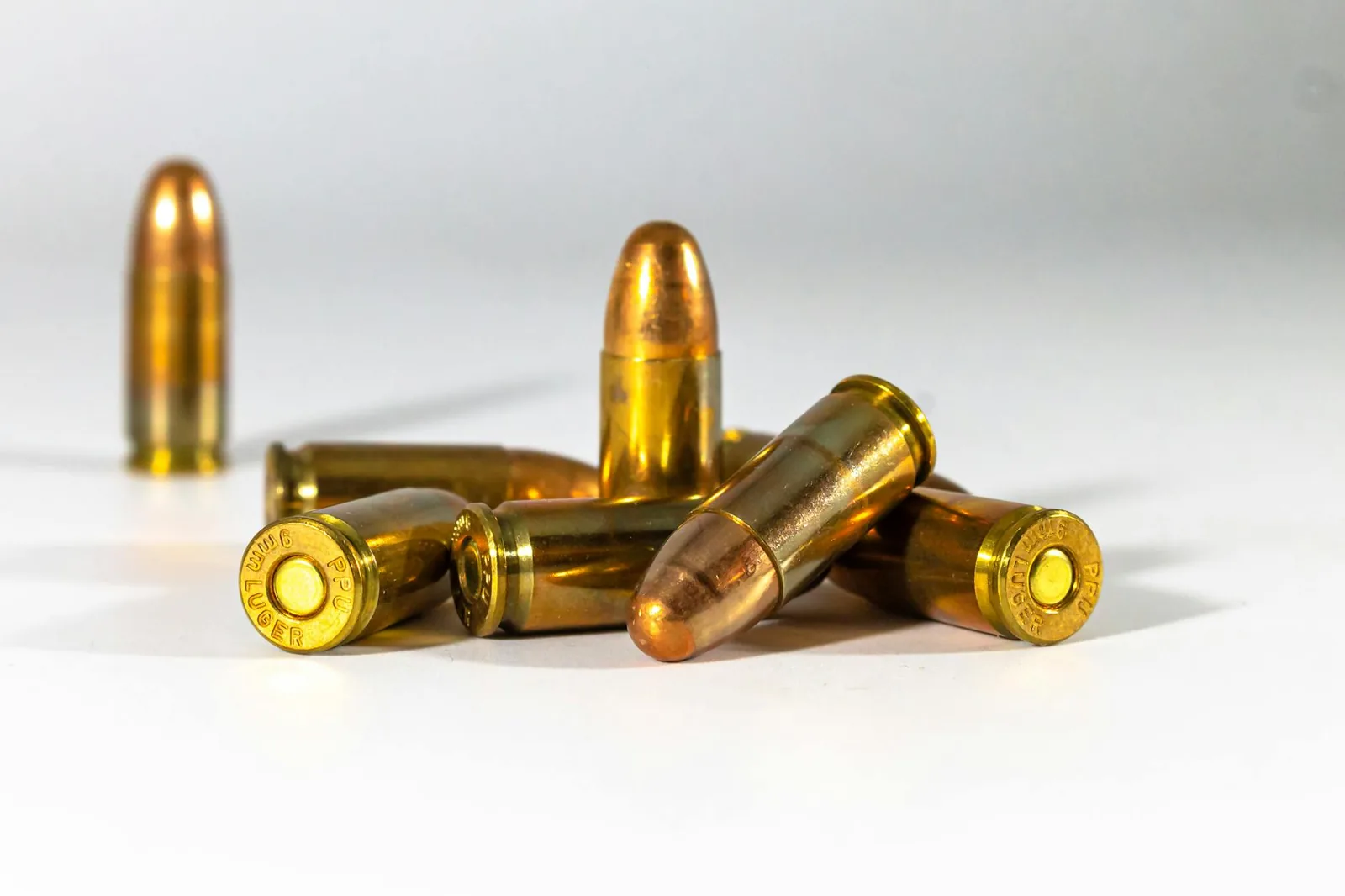
For a first centerfire carry pistol, 9mm is the sensible default. It balances manageable recoil, double-digit capacity in compact frames, the cheapest centerfire practice ammunition, and a deep selection of modern defensive loads tuned for short barrels. The .380 ACP mainly exists to power the smallest, lightest pocket pistols. Those are easy to carry, but because the guns weigh so little, .380 recoil can feel snappier than 9mm from a slightly larger pistol, capacity runs lower, and the ammunition costs more. Pick .380 only if absolute minimum size is your top priority and you have shot one enough to run it well. The .38 Special is the classic small-frame revolver round: moderate pressure (roughly 17,000 psi in standard loads, around 20,000 psi in +P) with a long track record. If you have settled on a revolver, .38 Special +P is the practical answer. Steer clear of magnum cartridges and the tiniest calibers for a first defensive handgun. Some new shooters also buy an inexpensive .22 pistol purely for cheap, low-recoil practice alongside their carry gun, which is a fine idea, but treat it as a separate purchase, not your carry piece.
Frame Size and Capacity
Carry pistols sort roughly into micro-compacts, subcompacts, and compacts, and the choice is a constant tug-of-war between concealability and shootability. A bigger, heavier gun is easier to shoot well and holds more rounds. A smaller, lighter one hides better and rides more comfortably all day, which means it is the one you will actually carry. The good news for new buyers is that this trade-off has eased. Modern slimline pistols squeeze double-stack magazines into frames barely thicker than a single-stack, and capacity keeps climbing: Glock recently rolled out fifteen-round magazines for its slim G43X and G48 9mm pistols, a count that once demanded a much bulkier gun. A compact or micro-compact 9mm in that mold is, for many people, the sweet spot for a first gun: concealable enough to carry every day, big enough to shoot decently, and holding ten to fifteen rounds. Be honest about how you dress and how you will carry before you commit to the smallest option on the shelf.
Action Type: Striker-Fired or Hammer-Fired
Most modern carry semi-autos are striker-fired: no external hammer, and the trigger feels identical on every shot. They are simple to run and predictable to shoot, which is why they dominate the market. Hammer-fired guns come in a few styles: traditional double-action/single-action designs with a long first pull and lighter follow-ups, double-action-only models, and single-action pistols like the metal-framed Smith & Wesson CSX, carried “cocked and locked” behind a thumb safety. None of these is wrong, but a striker-fired pistol with one consistent trigger is the easiest platform to learn on. If a hammer gun appeals to you, just commit to learning and practicing its specific manual of arms.
Iron Sights or Optics-Ready?
A few years ago this was an enthusiast question. Now it is mainstream. A red dot optic is genuinely easier to shoot well with once you learn it, and optics-ready pistols (think Springfield’s Echelon with its plate-free mounting system, or the optics-cut Smith & Wesson CSX E-Series) let you add one without buying a new gun. For a first pistol, choosing an optics-ready model is smart future-proofing even if you do not mount a dot on day one. Whatever you pick, make sure it has usable backup iron sights, and learn to shoot with the irons first. If you carry after dark, factory tritium night sights, or at least a bright front sight, are worth the small upcharge.
Don’t Forget the Holster
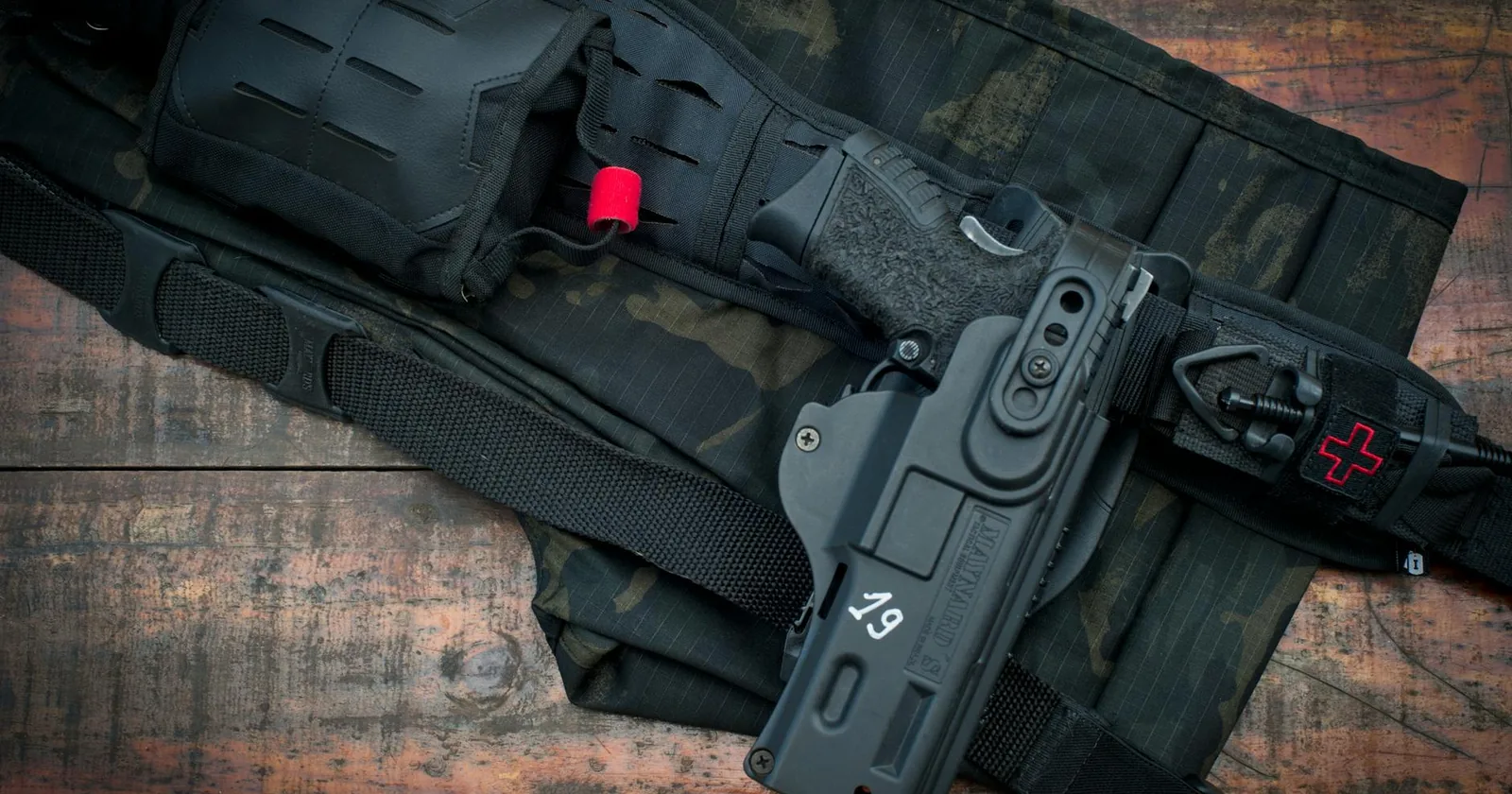
Your pistol and your holster are one purchase, not two. A popular, mainstream model has dozens of quality holster options. An obscure one may have almost none, which leaves you carrying it badly or not at all. Before you fall for a gun, confirm a reputable maker builds a holster for it in the style you plan to use, whether that is appendix inside the waistband, strong-side outside the waistband, or pocket carry. Budget for a real holster (rigid, molded to the gun, fully covering the trigger guard) and a proper gun belt to carry the weight. Never carry a pistol loose in a pocket or bag without a holster.
Budget Realistically
You do not need to spend a fortune. Several reliable, well-reviewed carry pistols, the Taurus GX4 among them, sell for well under $400, and a name-brand 9mm in the $400 to $600 range will serve you for years. The mistake is pouring your whole budget into the gun. Plan for the full kit: pistol, holster, a sturdy belt, a few hundred rounds of practice ammunition, a box or two of quality defensive ammo, an in-person class, and a way to store the gun securely at home. A modest pistol with good support gear and real training beats an expensive one you cannot afford to feed.
Before You Carry It
Buying the pistol is the start, not the finish. Get hands-on instruction from a certified instructor, because no amount of reading replaces a coach watching your grip, stance, and trigger press. Dry-fire at home and live-fire at the range until running the gun is automatic. And learn the law: where you may and may not carry, your state’s use-of-force rules, and how (or whether) your permit travels. Our guide on what to expect in your first concealed carry course covers the training side, concealed carry permits and state training requirements covers the legal side, and our concealed carry class FAQ answers the questions most first-timers have.
The “best” first concealed carry pistol is not a make and model. It is the gun that fits your hand, in a sensible caliber and size you can shoot well, that you will carry every single day, and that you are committed to training with. Work the decisions in that order and you will land on the right one.
Further reading (sources)
- Field & Stream on how a four-shooter panel tested this year’s most popular handguns
- Top Firearm Reviews with an NRA pistol instructor’s hands-on concealed carry picks
- All4Shooters for a close look at the Smith & Wesson Bodyguard 38 2.0 carry revolver
- Handguns Magazine on the optics-ready Smith & Wesson CSX E-Series
- Handguns Magazine with Springfield’s integrally compensated Echelon 4.0C Comp
- All4Shooters for Glock’s new 15-round magazines for its slimline 9mm pistols
- Field & Stream on why chamber pressure, not just caliber, defines a cartridge’s power
- Field & Stream with a tester’s rundown of the best .22 pistols for practice
Feature photo by Dan Galvani Sommavilla on Pexels.