Federal Firearms Law for Concealed Carriers: A Complete Reference Guide
Published on May 18, 2026
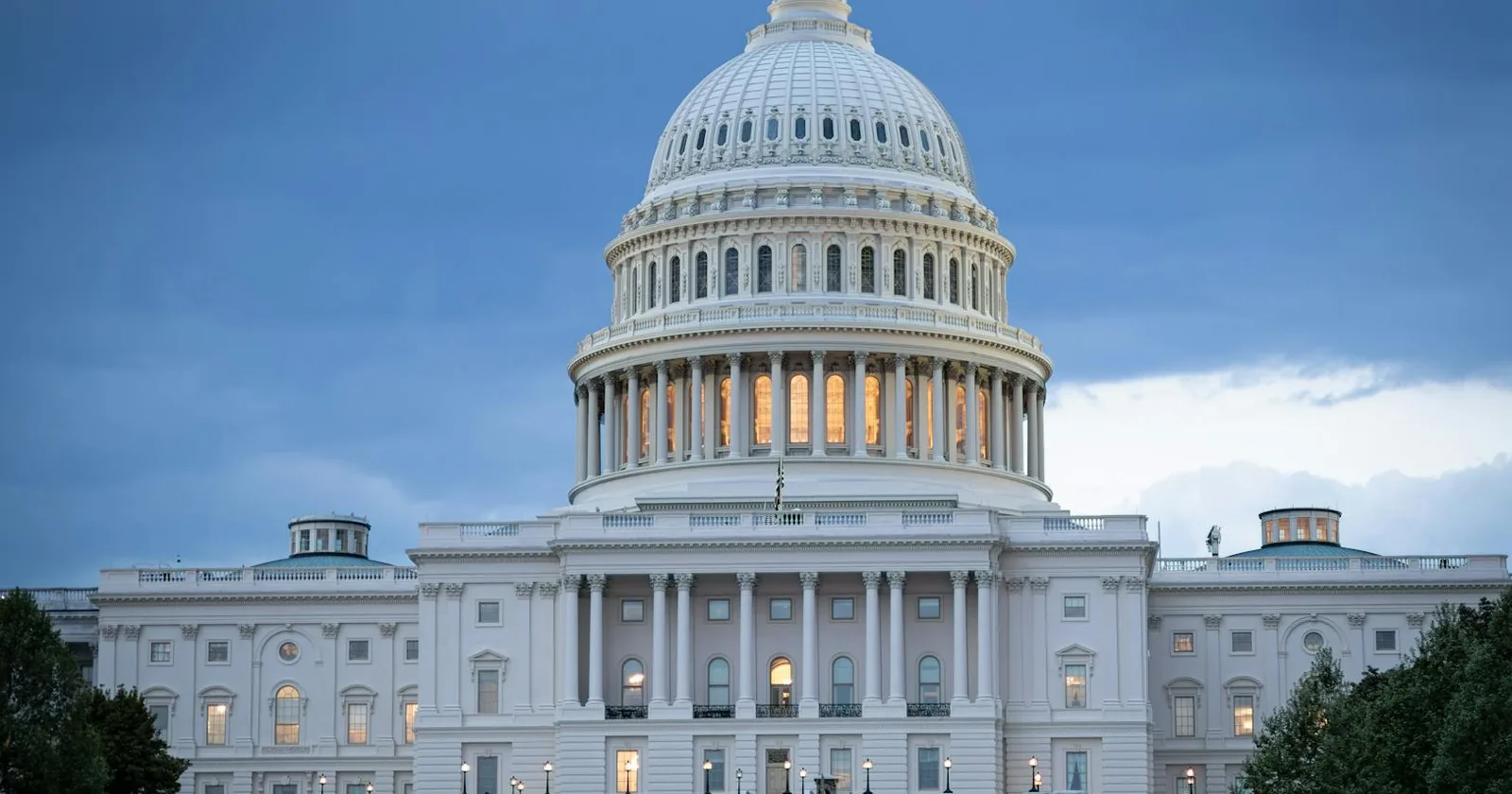
State permit law gets most of the attention in the concealed carry world, and for good reason: the patchwork of permitless, shall-issue, and may-issue regimes is where day-to-day legality lives. But underneath every state rule sits a layer of federal law that applies to you regardless of where you carry. Violating one of those statutes is almost always a federal felony, often punishable by years in prison, and ignorance of the rules is no defense. This guide walks through the federal statutes a CCW holder needs to know, what each one prohibits, and where the common pitfalls are. It is a reference, not a substitute for a firearms attorney, and the moment a real situation gets complicated you should call one.
The Gun Control Act of 1968 (GCA)
The Gun Control Act is the spine of modern federal firearms regulation. Passed after the assassinations of John F. Kennedy, Robert F. Kennedy, and Martin Luther King Jr., it created the federal licensing system for dealers, importers, and manufacturers (the FFL system), banned firearm sales to certain categories of people, prohibited most interstate handgun sales to private buyers, and set the framework for serialization, recordkeeping, and import controls (ATF, 2024). Almost every other statute on this page operates as an amendment to or refinement of the GCA. If a federal firearms rule exists, it most likely lives in 18 USC Chapter 44, which is the codification of the GCA.
NICS Background Checks and Form 4473
Every time you buy a firearm from a licensed dealer (FFL), you complete an ATF Form 4473 and the dealer runs your information through the National Instant Criminal Background Check System (NICS). Form 4473 asks identifying information, plus a series of yes-or-no questions about whether you fall into any of the federal prohibited categories. Two warnings on this form deserve emphasis. First, lying on Form 4473 is a federal felony under 18 USC 922(a)(6), punishable by up to ten years in prison, even if the underlying purchase would otherwise have been legal. Second, completing the form on behalf of someone else (a straw purchase) is a separate federal felony under the Bipartisan Safer Communities Act of 2022, which created a dedicated trafficking offense at 18 USC 932 (Congressional Research Service, 2023). Buying a gun for someone you know cannot pass a background check is one of the surest ways to face federal prison time, and it is prosecuted vigorously.
Federal Prohibited Persons (18 USC 922(g))
The same statute that bars certain people from buying a firearm also bars them from possessing one. Under 18 USC 922(g), you cannot lawfully possess a firearm or ammunition if you are:
- Convicted of a felony, or any crime punishable by more than one year in prison
- Convicted of a misdemeanor crime of domestic violence (the “Lautenberg Amendment”)
- Subject to certain domestic violence restraining orders
- An unlawful user of, or addicted to, any controlled substance (this includes marijuana under federal law, even in states that have legalized it)
- Adjudicated as mentally defective or committed to a mental institution
- A fugitive from justice
- Dishonorably discharged from the armed forces
- An illegal alien, or a nonimmigrant alien without specific qualifying status
- Someone who has renounced their US citizenship
- An indicted defendant awaiting trial on a felony charge (this bars purchase, but not pre-existing possession)
These categories are absolute under federal law. A state-issued concealed carry permit does not override them, and a state pardon may or may not restore federal rights depending on the offense. If any of these descriptions could apply to you, talk to a firearms attorney before you buy or carry anything.
The National Firearms Act (NFA)
The National Firearms Act of 1934 regulates a separate class of firearms that require federal registration, a $200 tax stamp (a few categories are $5), fingerprints, photographs, and ATF approval before transfer. NFA items include short-barreled rifles (SBRs), short-barreled shotguns (SBSs), suppressors (silencers), machine guns, destructive devices, and “any other weapons” (AOWs) like pen guns and certain disguised firearms (ATF, 2024). For most concealed carriers, the practical NFA touchpoint is suppressors, which are legal in roughly 42 states with an approved Form 4 transfer. Note that an NFA item registered in your name generally cannot be loaned to or even handled outside your presence by anyone not on the registration, and transporting certain NFA items across state lines requires advance ATF approval via Form 5320.20.

The Hughes Amendment: No New Civilian Machine Guns
The Firearm Owners Protection Act (FOPA) of 1986 was, on balance, a pro-gun-owner law, but it included a controversial rider known as the Hughes Amendment. The Hughes Amendment closed the civilian machine gun registry as of May 19, 1986, meaning no machine gun manufactured after that date may be transferred to a civilian (Congressional Research Service, 2022). The roughly 175,000 transferable pre-1986 machine guns still in private hands now trade for tens of thousands of dollars each because supply is fixed. This is why so-called “Glock switches” or “auto sears” (small devices that convert a semi-auto pistol or rifle to fully automatic fire) are federal felonies to possess: an auto sear is itself legally classified as a machine gun, and any unregistered post-1986 machine gun is contraband. Federal prosecutions for switches have climbed sharply, with cases routinely carrying ten years per device (PennLive, 2026).
Armor-Piercing Ammunition (LEOPA, 1986)
The Law Enforcement Officers Protection Act of 1986 banned the manufacture, import, and sale of certain “armor-piercing” handgun ammunition (18 USC 922(a)(7) and (a)(8)). The statute defines armor-piercing ammunition by core construction (steel, tungsten, brass, bronze, beryllium copper, or depleted uranium) for projectiles that can be used in a handgun, with narrow exemptions for sporting rounds (ATF, 2023). Civilians can possess covered ammunition that was lawfully manufactured before the ban or that qualifies under a sporting exemption, but commercial production for the civilian market is restricted, and importing covered ammunition without a license is a federal offense. Recent prosecutions, including a Wisconsin police chief accused of helping California dealers run an illegal import scheme, show that LEOPA enforcement is alive and well (Boston Herald, 2026).
The Gun-Free School Zones Act (GFSZA)
Under 18 USC 922(q), it is a federal crime to knowingly possess a firearm within 1,000 feet of a public, private, or parochial K-12 school. The act applies to the school itself and the surrounding zone, including sidewalks, parking lots, and streets that fall inside the 1,000-foot radius. There is a specific exemption for people who hold a concealed carry permit issued by the state in which the school is located, but the exemption does not extend to out-of-state permit holders even when reciprocity is in place. Crossing into a school zone with a firearm on a non-resident permit is a federal felony under the GFSZA, regardless of whether your home state permit is honored locally. Plan routes accordingly when you travel.
The Federal Frame-and-Receiver Rule (Ghost Guns)
In 2022, ATF issued Final Rule 2021R-05F, which redefined the terms “firearm” and “frame or receiver” to bring most so-called “ghost gun” kits and partially completed receivers under the GCA’s licensing, serialization, and background check requirements (ATF, 2022). The rule survived legal challenge in Garland v. VanDerStok, where the Supreme Court upheld it in 2025. The practical takeaway for a CCW holder: a build-it-yourself pistol or rifle made from an unserialized 80% lower, polymer frame kit, or 3D-printed receiver after the rule’s effective date is almost certainly an unlawful unserialized firearm, regardless of personal-use intent in many states. Recent ghost gun seizures, including 3D-printed handgun trafficking cases in Toronto and across the US, illustrate how aggressively investigators now pursue these manufactures (CityNews Toronto, 2026).
FOPA Interstate Transport (18 USC 926A)
Buried inside the same 1986 FOPA that produced the Hughes Amendment is a protection every traveling carrier should know: the “Safe Passage” provision at 18 USC 926A. It permits any person who may lawfully possess and carry a firearm in their state of origin and destination to transport that firearm through any intervening state, even one that would otherwise prohibit the gun. To qualify, the firearm must be unloaded, and the firearm and ammunition must be in a locked container that is not the glove compartment or center console (in a vehicle without a separate trunk, a locked hard case in the cargo area suffices). The protection is real but narrow. It does not authorize an overnight stop, a meal break in a restricted jurisdiction, or carry on the person. Several states (notably New York and New Jersey) have arrested travelers anyway and forced them to raise 926A as an affirmative defense in court, which is a miserable place to litigate it.
State Law Still Wins on the Margins
Federal law sets the floor. State law sets nearly everything else: who can get a permit, where you can carry, what training is required, how use of force is judged, and how reciprocity flows from one state to the next. For the state side of the picture, see our guide on concealed carry permits and state training requirements, and for the training side see what to expect in your first concealed carry course. The right place for a new permit holder to start is the basics: pick a carry pistol you will actually train with, get hands-on instruction, and read the concealed carry class FAQ so you walk in knowing what to expect.
Federal firearms law is not friendly territory for the casual reader. The statutes are scattered across Title 18 and Title 26, the ATF rules layer on top, and case law shifts the boundaries every few years. Treat this guide as the starting map. When the facts of your situation start to matter, talk to a firearms attorney.
Further reading (sources)
- ATF on the Gun Control Act and federal firearms licensing
- ATF for the National Firearms Act and NFA-regulated items
- ATF with the 2022 frame-and-receiver final rule (2021R-05F)
- Congressional Research Service on the Bipartisan Safer Communities Act and the new straw purchase statute
- Congressional Research Service for the Firearm Owners Protection Act and the Hughes Amendment
- PennLive with a Pennsylvania case on machine gun conversion device possession
- Boston Herald on a federal armor-piercing ammunition import prosecution
- CityNews Toronto for a recent 3D-printed handgun trafficking investigation
- Johns Hopkins Center for Gun Violence Solutions for a public carry permitting model policy guide
- Pew Research Center with recent data on gun deaths in the United States